

Plant Growth Regulator Quality Testing: Understanding COA, SDS and Product Documentation
When sourcing plant growth regulators (PGRs) from overseas suppliers, product quality and documentation are among the most important considerations for agricultural importers, distributors, and wholesalers.
Beyond comparing prices and active ingredient concentrations, buyers need to understand how products are tested, what quality parameters are included in a Certificate of Analysis (COA), and which technical documents are available to support international trade.
At Pinsoa&Aowei, we understand that reliable agricultural products require more than competitive pricing. Product specifications, quality inspection, technical documentation, and dependable supply chain support all play an important role in building long-term business relationships.
This guide explains the main quality documents associated with plant growth regulators and highlights what buyers should consider when evaluating a PGR supplier.

Their performance depends on several factors, including:
For agricultural importers and distributors, checking product quality before shipment helps reduce purchasing risks, supports product evaluation, and provides a clearer basis for communication with downstream customers.
It helps buyers verify whether the tested product meets the stated quality requirements.
For plant growth regulators, a COA may include the following information:
Not every product requires all of these tests. For example, a soluble powder and a suspension concentrate have different physical properties and therefore require different quality evaluation methods.
For technical-grade active ingredients, testing may focus more heavily on active ingredient assay, impurity profiles, and relevant physical and chemical properties.
For formulated products, testing may also cover formulation-specific performance indicators.
When reviewing a COA, buyers should pay attention to:
SDS is the current standardized term commonly used under the Globally Harmonized System of Classification and Labelling of Chemicals (GHS). Many buyers and suppliers still use the term MSDS in everyday business communication.
Unlike a COA, which focuses on product quality test results, an SDS provides important information about chemical hazards, safe handling, storage, transportation, and emergency measures.
An SDS generally contains 16 sections:
The SDS should correspond to the actual product composition and relevant regulatory requirements. Buyers should also check whether a local-language version is required in the destination market.
In simple terms:
Product Specification Sheet
Provides detailed product information, including active ingredient content, formulation, appearance, physical and chemical properties, and packaging specifications.
Technical Data Sheet (TDS)
Summarizes product characteristics, technical information, and relevant application or handling guidance.
Product Registration Documents
Some markets require plant growth regulators or agricultural chemical products to be registered or authorized before importation, distribution, or sale.
The applicable registration requirements vary by country and product. Buyers should verify the status of the specific product and its approved uses in the destination market.
Certificate of Origin (CO)
A Certificate of Origin identifies the country of origin of the goods and may be required for customs clearance or preferential tariff treatment.
Other Inspection or Testing Reports
Depending on customer requirements, product specifications, and regulatory obligations, additional inspection or laboratory testing reports may also be requested.
It is important to distinguish between routine batch quality documentation, safety documentation, regulatory approvals, and independent third-party inspection reports.
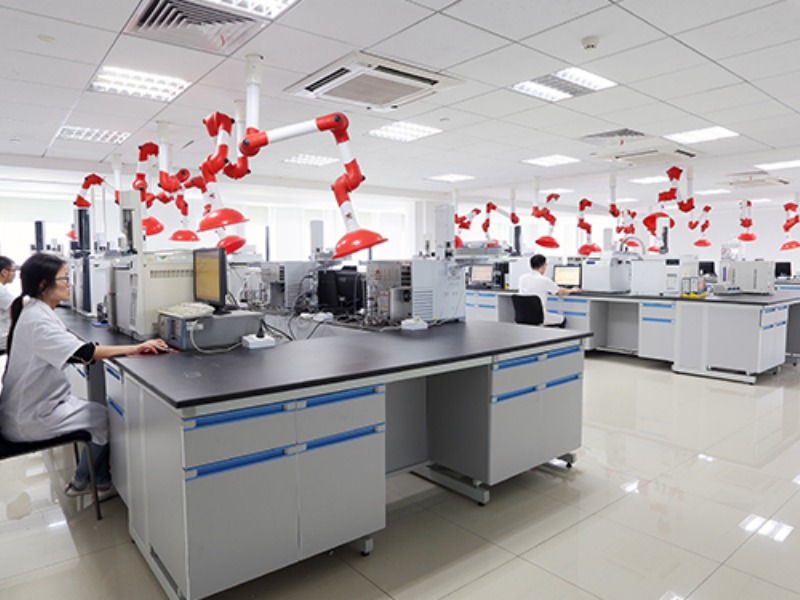
Our focus is not simply on supplying plant growth regulators, but also on providing buyers with clear product information and appropriate supporting documents.
Our quality and supply support includes:
1. Product Specification Confirmation
We help buyers confirm active ingredients, concentrations, formulation types, and packaging specifications before order placement.
2. Quality Inspection and COA Support
Relevant quality testing information and COA documentation can be provided according to the product and batch requirements, allowing buyers to review key quality parameters.
3. SDS/MSDS Documentation
We can provide relevant safety data documentation to support product handling, storage, transportation, and purchasing evaluation.
4. Technical Documentation Support
Depending on the product and destination market, we can assist with available product specification sheets, technical information, and other applicable supporting documents.
5. Flexible Product and Packaging Options
Different agricultural markets have different requirements. We support discussions on product concentrations, formulations, and packaging specifications according to sourcing needs and product availability.
Our goal is to help customers make informed purchasing decisions and establish more transparent cooperation throughout the sourcing process.
Henan has an extensive agricultural planting base, with wheat, maize, peanuts, vegetables, and other crops playing important roles in regional agricultural production.
According to the Henan Provincial Government, the province produces around 10% of China's grain using approximately 6% of the country's arable land. Its grain-growing acreage exceeds 10.7 million hectares, making it one of China's most important grain-producing regions.
This agricultural foundation creates a valuable environment for understanding crop production requirements and agricultural input demand.
For plant growth regulator sourcing, our location in Henan offers several practical advantages:
Close to a Major Agricultural Market
Being based in a major agricultural province provides closer exposure to diverse crop production needs and seasonal agricultural requirements.
Access to Agricultural Supply Chain Resources
Henan has an established agricultural economy and a range of agricultural input businesses. Our regional network helps us coordinate product sourcing and communicate with relevant manufacturing and supply partners.
Understanding of Crop Application Requirements
Exposure to different crop production systems helps us better understand the practical requirements of agricultural buyers, including active ingredients, formulations, and product specifications.
Convenient Product Sourcing and Coordination
Our location in central China supports communication and coordination with regional supply partners, helping us respond to different sourcing requirements.
Rather than relying on a single product category, we aim to provide a broader selection of plant growth regulator products for different agricultural markets.
At Pinsoa&Aowei, we focus on providing agricultural buyers with:
Contact Pinsoa&Aowei to request product specifications, available quality documents, and a quotation for your target market.
Beyond comparing prices and active ingredient concentrations, buyers need to understand how products are tested, what quality parameters are included in a Certificate of Analysis (COA), and which technical documents are available to support international trade.
At Pinsoa&Aowei, we understand that reliable agricultural products require more than competitive pricing. Product specifications, quality inspection, technical documentation, and dependable supply chain support all play an important role in building long-term business relationships.
This guide explains the main quality documents associated with plant growth regulators and highlights what buyers should consider when evaluating a PGR supplier.
1. Why Is Quality Testing Important for Plant Growth Regulators?
Plant growth regulators are used to influence specific physiological processes in crops, including cell division, stem elongation, flowering, fruit development, and plant stress responses.Their performance depends on several factors, including:
- Active ingredient identity and concentration.
- Formulation quality and physical properties.
- Product stability during storage.
- Solubility or dispersibility, depending on the formulation.
- Compliance with product specifications and applicable regulations.
For agricultural importers and distributors, checking product quality before shipment helps reduce purchasing risks, supports product evaluation, and provides a clearer basis for communication with downstream customers.
2. What Is a COA (Certificate of Analysis)?
A Certificate of Analysis (COA) is a quality document that records the analytical results of a specific product or batch against defined specifications.It helps buyers verify whether the tested product meets the stated quality requirements.
For plant growth regulators, a COA may include the following information:
2.1 Basic Product Information
- Product name.
- Active ingredient.
- Product formulation.
- Batch or lot number.
- Manufacturing date.
- Testing date.
- Applicable product specification.
2.2 Common Quality Testing Parameters
The exact testing items depend on the active ingredient, formulation type, product specification, and applicable testing standards.| Testing Item | What It Evaluates |
| Active ingredient content | Whether the active ingredient concentration meets the specified requirement |
| Appearance | Color, physical form, and general product appearance |
| pH value | Acidity or alkalinity of applicable formulations |
| Moisture content | Water content in products where this parameter is relevant |
| Solubility | Ability of a product to dissolve in a specified solvent or water |
| Suspensibility | Ability of a formulation to remain uniformly dispersed in water |
| Particle size | Particle size distribution in relevant powder or suspension formulations |
| Density | Density of applicable liquid formulations |
| Impurity content | Certain specified impurities, where required by the product standard |
For technical-grade active ingredients, testing may focus more heavily on active ingredient assay, impurity profiles, and relevant physical and chemical properties.
For formulated products, testing may also cover formulation-specific performance indicators.
2.3 Why Should Buyers Check the Batch Number?
A COA should be traceable to the product or batch it represents.When reviewing a COA, buyers should pay attention to:
- Whether the product name matches the order.
- Whether the active ingredient and concentration are correct.
- Whether the batch number is identifiable.
- Whether the test results meet the stated specifications.
- Whether the document identifies the testing organization or responsible issuer.
3. What Is an MSDS or SDS?
MSDS stands for Material Safety Data Sheet, while SDS stands for Safety Data Sheet.SDS is the current standardized term commonly used under the Globally Harmonized System of Classification and Labelling of Chemicals (GHS). Many buyers and suppliers still use the term MSDS in everyday business communication.
Unlike a COA, which focuses on product quality test results, an SDS provides important information about chemical hazards, safe handling, storage, transportation, and emergency measures.
An SDS generally contains 16 sections:
- Identification of the substance or mixture and the supplier.
- Hazard identification.
- Composition and information on ingredients.
- First-aid measures.
- Fire-fighting measures.
- Accidental release measures.
- Handling and storage.
- Exposure controls and personal protection.
- Physical and chemical properties.
- Stability and reactivity.
- Toxicological information.
- Ecological information.
- Disposal considerations.
- Transport information.
- Regulatory information.
- Other information, including preparation or revision details.
The SDS should correspond to the actual product composition and relevant regulatory requirements. Buyers should also check whether a local-language version is required in the destination market.
4. COA vs. SDS: What Is the Difference?
Although both documents are important in agricultural chemical trade, they serve different purposes.| Comparison | COA | SDS (MSDS) |
| Full Name | Certificate of Analysis | Safety Data Sheet |
| Main Purpose | Demonstrates analytical quality results | Communicates chemical hazards and safety information |
| Main Focus | Product specifications and test results | Safe handling, storage, transport, and emergency response |
| Batch Information | Usually includes batch or lot identification | May identify the product and revision but is not normally a batch test report |
| Main Users | Buyers, quality inspectors, distributors | Importers, warehouse teams, transporters, and users |
| Main Function | Quality verification | Chemical safety communication |
- COA answers: Does this batch meet the specified quality requirements?
- SDS answers: How should this product be handled and managed safely?
5. Other Important Documents When Purchasing Plant Growth Regulators
Depending on the destination country, product category, and transaction requirements, buyers may need additional technical and regulatory documents.Product Specification Sheet
Provides detailed product information, including active ingredient content, formulation, appearance, physical and chemical properties, and packaging specifications.
Technical Data Sheet (TDS)
Summarizes product characteristics, technical information, and relevant application or handling guidance.
Product Registration Documents
Some markets require plant growth regulators or agricultural chemical products to be registered or authorized before importation, distribution, or sale.
The applicable registration requirements vary by country and product. Buyers should verify the status of the specific product and its approved uses in the destination market.
Certificate of Origin (CO)
A Certificate of Origin identifies the country of origin of the goods and may be required for customs clearance or preferential tariff treatment.
Other Inspection or Testing Reports
Depending on customer requirements, product specifications, and regulatory obligations, additional inspection or laboratory testing reports may also be requested.
It is important to distinguish between routine batch quality documentation, safety documentation, regulatory approvals, and independent third-party inspection reports.
6. How Does Pinsoa&Aowei Support Product Quality and Documentation?
At Pinsoa&Aowei, we recognize that product quality and documentation are essential when serving international agricultural markets.Our focus is not simply on supplying plant growth regulators, but also on providing buyers with clear product information and appropriate supporting documents.
Our quality and supply support includes:
1. Product Specification Confirmation
We help buyers confirm active ingredients, concentrations, formulation types, and packaging specifications before order placement.
2. Quality Inspection and COA Support
Relevant quality testing information and COA documentation can be provided according to the product and batch requirements, allowing buyers to review key quality parameters.
3. SDS/MSDS Documentation
We can provide relevant safety data documentation to support product handling, storage, transportation, and purchasing evaluation.
4. Technical Documentation Support
Depending on the product and destination market, we can assist with available product specification sheets, technical information, and other applicable supporting documents.
5. Flexible Product and Packaging Options
Different agricultural markets have different requirements. We support discussions on product concentrations, formulations, and packaging specifications according to sourcing needs and product availability.
Our goal is to help customers make informed purchasing decisions and establish more transparent cooperation throughout the sourcing process.
7. Why Source Plant Growth Regulators from Henan, China?
Pinsoa&Aowei is based in Henan Province, a major agricultural province in central China with a strong foundation in crop production and agricultural development.Henan has an extensive agricultural planting base, with wheat, maize, peanuts, vegetables, and other crops playing important roles in regional agricultural production.
According to the Henan Provincial Government, the province produces around 10% of China's grain using approximately 6% of the country's arable land. Its grain-growing acreage exceeds 10.7 million hectares, making it one of China's most important grain-producing regions.
This agricultural foundation creates a valuable environment for understanding crop production requirements and agricultural input demand.
For plant growth regulator sourcing, our location in Henan offers several practical advantages:
Close to a Major Agricultural Market
Being based in a major agricultural province provides closer exposure to diverse crop production needs and seasonal agricultural requirements.
Access to Agricultural Supply Chain Resources
Henan has an established agricultural economy and a range of agricultural input businesses. Our regional network helps us coordinate product sourcing and communicate with relevant manufacturing and supply partners.
Understanding of Crop Application Requirements
Exposure to different crop production systems helps us better understand the practical requirements of agricultural buyers, including active ingredients, formulations, and product specifications.
Convenient Product Sourcing and Coordination
Our location in central China supports communication and coordination with regional supply partners, helping us respond to different sourcing requirements.
Rather than relying on a single product category, we aim to provide a broader selection of plant growth regulator products for different agricultural markets.
8. Pinsoa&Aowei: Your Plant Growth Regulator Supply Partner
Choosing a plant growth regulator supplier involves more than comparing quotations. Product specifications, quality documentation, supply coordination, and communication all contribute to a successful sourcing relationship.At Pinsoa&Aowei, we focus on providing agricultural buyers with:
- A range of plant growth regulator active ingredients.
- Different formulations and product specifications.
- Relevant COA and SDS/MSDS documentation.
- Product information and technical support.
- Flexible packaging and sourcing coordination.
- Communication for international wholesale and distribution requirements.
Contact Pinsoa&Aowei to request product specifications, available quality documents, and a quotation for your target market.
RECENT POSTS
-
Plant Growth Regulator Quality Testing: Understanding COA, SDS and Product Documentation
-
Fruitone-CPA Supplier: Product Specifications and Wholesale Supply
-
Brassinolide Supplier Solutions for Agricultural and Wholesale Buyers
-
How to Choose the Right Plant Growth Regulator:Active Ingredients, Formulations and Applications
Featured News