

a New Option for Boosting Fruit Tree Yields:How Plant Growth Regulators Scientifically Modulate Growth Cycles
Plant growth regulators are a class of chemical substances—synthesized artificially or extracted naturally—capable of modulating the growth and developmental processes of plants. Their core mechanism of action lies in mimicking or interfering with the signal transduction of endogenous plant hormones (such as auxins, cytokinins, and gibberellins), thereby influencing physiological processes such as cell division, elongation, differentiation, and organ formation. In the agricultural sector, the application of these substances provides a scientific means to enhance crop yields, improve quality, and bolster stress resistance.
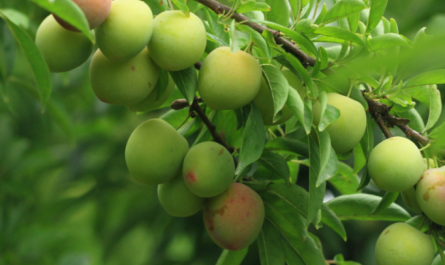
Take Brassinolide as an example: with an active ingredient content of 0.2%, it functions as a low-toxicity, completely water-soluble amino acid-based foliar fertilizer. When diluted 5,000-fold and sprayed onto fruit tree foliage, it significantly promotes the translocation of photosynthetic products to the fruit while simultaneously regulating the balance of endogenous hormones within the tree, thereby reducing the incidence of flower and fruit drop. Experimental data indicate that after three consecutive applications on fruit trees such as apples and citrus, the average weight per fruit increases by 15%–20%, and the sugar-to-acid ratio becomes more optimized. Its mechanism of action involves activating receptor proteins on cell membranes to enhance the plant's nutrient uptake efficiency, while simultaneously inducing the expression of stress-related genes to boost the fruit tree's tolerance to adverse conditions such as drought and low temperatures.
From a safety perspective, the acute oral toxicity of Brassinolide is merely 0.0000000004, and its acute dermal toxicity is 0.000000067—figures far below the safety thresholds established for common pesticides. Its complete water solubility ensures the uniform spreading of the spray solution across leaf surfaces, thereby mitigating the risk of phytotoxicity caused by excessively high localized concentrations. Regarding dosage control, a dilution ratio of 0.2%–0.5% is sufficient to meet growth regulation requirements while preventing issues such as premature plant senescence or fruit malformation that can result from overuse. It is worth noting that the efficacy of these regulators is significantly influenced by the timing of application; therefore, it is recommended to apply them during critical developmental stages—such as the flower bud differentiation phase and the young fruit expansion phase—to achieve optimal regulatory results.

In current agricultural practice, the application of plant growth regulators has evolved from single-function applications to multi-functional, integrated approaches. Through the synergistic action of various components, multiple objectives—such as promoting growth, enhancing stress resistance, and improving quality—can be achieved simultaneously. This technological evolution reflects modern agriculture's demand for precise regulation and offers new perspectives on addressing the challenges of sustainable production amidst resource constraints.
RECENT POSTS
-
13th National Plant Growth Regulator Industry Conference Held in Hebi Henan
-
Key Innovation Directions for Plant Hormone Technologies
-
Latest Growth Forecast for the Southeast Asian Plant Growth Regulator Market
-
Experiments have demonstrated excellent results using the plant hormone "Pineapple King" in Vietnamese pineapple cultivation
Featured News