

How to identify expired pesticides
Pesticides have a shelf life, and only use within this period ensures safety and effectiveness. Using expired pesticides on crops not only fails to control pests and diseases but can also lead to pesticide resistance, delaying the optimal time for pest and disease control, making control difficult or impossible, and, more importantly, causing phytotoxicity and irreparable consequences. Therefore, farmers must never use expired pesticides.
I. Seven Methods for Identifying Pesticide Ineffectiveness
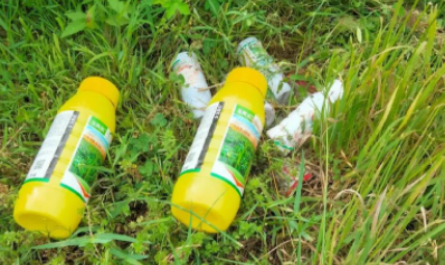
1. Visual Inspection:
For powdered pesticides, first examine the appearance. If it is visibly damp and clumps together, has a weak odor or other unusual smell, and can be rubbed into a ball, it is essentially ineffective. For emulsifiable concentrates, first let the bottle stand. If the liquid is cloudy or separates into layers (i.e., oil and water separation), with sediment or suspended flocculent matter, the pesticide is ineffective.
2. Heating Method:
Applicable to powdered pesticides. 1. Temperature Test 1: Take 5-10 grams of pesticide and heat it on a metal plate. If it produces a large amount of white smoke with a strong, pungent odor, the pesticide is in good condition. Otherwise, it is ineffective.
3. Floating Method:
Applicable to wettable powder pesticides. Take 200 grams of water, then weigh out 1 gram of pesticide and gently and evenly sprinkle it onto the water surface. Observe carefully. If it wets and dissolves in water within one minute, it is an effective pesticide; otherwise, it is ineffective.
4. Suspension Method.
Applicable to wettable powder pesticides. Take 30-50 grams of pesticide, place it in a glass container, add a small amount of water to make a paste, then add 150-200 grams of water and stir well. Let it stand for 10 minutes and observe. Unactivated pesticides have good solubility, with fine suspended particles in the solution, slow settling speed, and small sediment volume. Inactivated pesticides show the opposite.
5. Shaking Method.
Applicable to emulsion pesticides. For pesticides that show oil-water separation, shake the bottle vigorously and let it stand for 1 hour. If separation still occurs, the pesticide has deteriorated and become ineffective.
6. Hot Melting Method.
Applicable to emulsion pesticides. Place the pesticide with sediment, bottle and all, into warm water (50-60℃ is ideal) for 1 hour and observe. If the sediment dissolves, the pesticide is still effective and can be used again after the sediment dissolves; if the sediment is difficult to dissolve or does not dissolve at all, it has become ineffective.
7. Dilution Method.
This method is suitable for emulsion pesticides. Take 50 grams of pesticide, place it in a glass bottle, add 150 grams of water, shake vigorously, and let it stand for 30 minutes. If the solution is a uniform milky white color with no floating oil on top and no sediment at the bottom, the pesticide is in good condition. Otherwise, it is an ineffective pesticide; the more floating oil on top, the weaker the pesticide's efficacy.
I. Seven Methods for Identifying Pesticide Ineffectiveness
1. Visual Inspection:
For powdered pesticides, first examine the appearance. If it is visibly damp and clumps together, has a weak odor or other unusual smell, and can be rubbed into a ball, it is essentially ineffective. For emulsifiable concentrates, first let the bottle stand. If the liquid is cloudy or separates into layers (i.e., oil and water separation), with sediment or suspended flocculent matter, the pesticide is ineffective.
2. Heating Method:
Applicable to powdered pesticides. 1. Temperature Test 1: Take 5-10 grams of pesticide and heat it on a metal plate. If it produces a large amount of white smoke with a strong, pungent odor, the pesticide is in good condition. Otherwise, it is ineffective.
3. Floating Method:
Applicable to wettable powder pesticides. Take 200 grams of water, then weigh out 1 gram of pesticide and gently and evenly sprinkle it onto the water surface. Observe carefully. If it wets and dissolves in water within one minute, it is an effective pesticide; otherwise, it is ineffective.
4. Suspension Method.
Applicable to wettable powder pesticides. Take 30-50 grams of pesticide, place it in a glass container, add a small amount of water to make a paste, then add 150-200 grams of water and stir well. Let it stand for 10 minutes and observe. Unactivated pesticides have good solubility, with fine suspended particles in the solution, slow settling speed, and small sediment volume. Inactivated pesticides show the opposite.
5. Shaking Method.
Applicable to emulsion pesticides. For pesticides that show oil-water separation, shake the bottle vigorously and let it stand for 1 hour. If separation still occurs, the pesticide has deteriorated and become ineffective.
6. Hot Melting Method.
Applicable to emulsion pesticides. Place the pesticide with sediment, bottle and all, into warm water (50-60℃ is ideal) for 1 hour and observe. If the sediment dissolves, the pesticide is still effective and can be used again after the sediment dissolves; if the sediment is difficult to dissolve or does not dissolve at all, it has become ineffective.
7. Dilution Method.
This method is suitable for emulsion pesticides. Take 50 grams of pesticide, place it in a glass bottle, add 150 grams of water, shake vigorously, and let it stand for 30 minutes. If the solution is a uniform milky white color with no floating oil on top and no sediment at the bottom, the pesticide is in good condition. Otherwise, it is an ineffective pesticide; the more floating oil on top, the weaker the pesticide's efficacy.