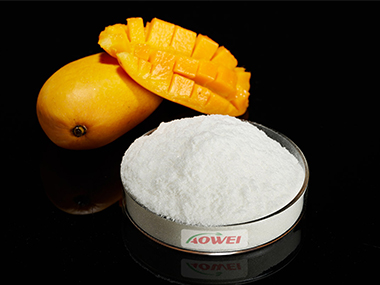
Spraying S-abscisic acid during the wheat booting and grain-filling stages effectively increases yield and improves quality. Its primary benefits lie in increasing the thousand-grain weight, enhancing grain quality, and boosting stress resistance; it is a commonly used plant growth regulator in the "one spray, three preventions" (comprehensive pest, disease, and stress control) program for wheat.
Verification of S-abscisic acid's specific effects
Increasing thousand-grain weight to boost yield
S-abscisic acid inhibits excessive vegetative growth (stem and leaf elongation), thereby redirecting more nutrients toward grain filling. Simultaneously, it enhances photosynthesis and accelerates the synthesis and accumulation of amino acids and proteins. This promotes full grain expansion and development, significantly increasing the thousand-grain weight. Data indicates that proper application can increase the thousand-grain weight by 1–3 grams, ultimately resulting in a yield increase of 5%–15%.
Improving wheat quality
S-abscisic acid promotes the accumulation of dry matter—such as starch and protein—within the grain. It ensures normal nutrient transport even under stress conditions like drought or high temperatures, reducing the proportion of shriveled or empty grains. It also improves grain plumpness and uniformity, thereby enhancing processing quality; these quality improvements are particularly pronounced in dryland farming areas.
Enhancing stress resistance and reducing yield loss risks
The booting and grain-filling stages are when wheat is most vulnerable to damage from hot, dry winds and drought. S-abscisic acid triggers the plant's stress-response systems, boosting resistance to hot, dry winds, high temperatures, and drought. It extends the functional lifespan of leaves, prevents premature senescence and heat-induced forced ripening, and ensures smooth grain filling—offering superior stress-resistance performance compared to using brassinosteroids alone. Standard Usage Guidelines
For winter wheat, S-abscisic acid is commonly used in the "one spray, three preventions" (comprehensive control) tank mix. Typical application details are as follows:
Dosage: For the 0.1% formulation, the application rate is 40–50 grams per mu. If sprayed alone, the recommended rate is 20 milliliters per mu for the 0.1% formulation, while the 0.03% formulation should be diluted 1,500-fold before spraying.
Tank Mixing: It is typically mixed with fungicides (such as pyraclostrobin), insecticides (such as high-efficiency cypermethrin), and foliar fertilizers (such as potassium dihydrogen phosphate). This approach simultaneously controls diseases, pests, and damage from dry, hot winds while boosting yield and quality, making it the mainstream application strategy during the booting and grain-filling stages.