

Foliar Fertilization and Pesticide Application Can Be Done Simultaneously
Chemical fertilizers and pesticides are indispensable production materials in modern agriculture. To improve yield and quality, farmers are increasingly applying chemical fertilizers more frequently and in greater variety. Foliar fertilization, due to its low fertilizer consumption and rapid effect, has become a frequently used technique for farmers, especially fruit and vegetable growers. On the other hand, farmers also frequently spray pesticides to control pests and diseases. Many people try to mix pesticides and fertilizers together for simultaneous application, aiming to save labor and improve efficiency.
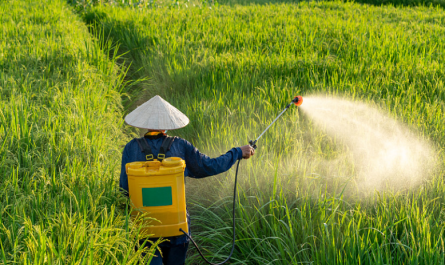
The key to successful mixing is that the fungicides and insecticides, as well as the pesticides and fertilizers, should not undergo chemical reactions, nor should they affect the physical properties of the pesticides and fertilizers, such as solubility, suspension, and emulsification. They should also not affect each other's efficacy. Of course, the absence of chemical reactions also prevents increased toxicity to humans, animals, and plants, and prevents the decomposition of the pesticides and fertilizers. From the perspective of maintaining efficacy, we already know that some pesticides cannot be mixed with alkaline pesticides (lime sulfur, Bordeaux mixture), such as insecticides like flufenoxuron, diflubenzuron, acetamiprid, and tin compounds, and fungicides like mancozeb, aluminum tris(ethylphosphonate), metalaxyl, mefenoxam, ketoconazole, epoxiconazole, iprodione, kasugamycin, polyoxin, and nystatin. By extension, they should also not be mixed with alkaline or weakly alkaline fertilizers such as ammonium carbonate, wood ash, calcium magnesium phosphate, diammonium phosphate, borax, and ammonium molybdate.
Some plant growth regulators, such as gibberellin, chlormequat, and ethephon, should also not be mixed with alkaline pesticides or fertilizers, otherwise, they will decompose and become ineffective. If herbicides are used for soil treatment, it is generally safe, especially if each is mixed with moist soil (or water) before being mixed together for application. However, if used for foliar application, extreme caution is necessary. Even slightly higher doses or uneven application can cause phytotoxicity, so they should generally not be mixed with fertilizers. If mixing is necessary, the herbicide should first be prepared as a stock solution, and the fertilizer should also be dissolved in water before mixing with the stock solution. The mixture should be prepared and applied immediately. Biopesticides should not be mixed with chemical fertilizers or fungicides, as fertilizers and fungicides may kill the beneficial microorganisms they contain, reducing their effectiveness. Additionally, attention should be paid to specific regulations regarding the mixing of certain pesticides. For example, a fungicide called chlorobromoisocyanuric acid, which can control fungal, bacterial, and even viral diseases, is a valuable pesticide, but it has a regulation stating that it "should not be mixed with other pesticides." By extension, it should also not be mixed with fertilizers.
The key to successful mixing is that the fungicides and insecticides, as well as the pesticides and fertilizers, should not undergo chemical reactions, nor should they affect the physical properties of the pesticides and fertilizers, such as solubility, suspension, and emulsification. They should also not affect each other's efficacy. Of course, the absence of chemical reactions also prevents increased toxicity to humans, animals, and plants, and prevents the decomposition of the pesticides and fertilizers. From the perspective of maintaining efficacy, we already know that some pesticides cannot be mixed with alkaline pesticides (lime sulfur, Bordeaux mixture), such as insecticides like flufenoxuron, diflubenzuron, acetamiprid, and tin compounds, and fungicides like mancozeb, aluminum tris(ethylphosphonate), metalaxyl, mefenoxam, ketoconazole, epoxiconazole, iprodione, kasugamycin, polyoxin, and nystatin. By extension, they should also not be mixed with alkaline or weakly alkaline fertilizers such as ammonium carbonate, wood ash, calcium magnesium phosphate, diammonium phosphate, borax, and ammonium molybdate.
Some plant growth regulators, such as gibberellin, chlormequat, and ethephon, should also not be mixed with alkaline pesticides or fertilizers, otherwise, they will decompose and become ineffective. If herbicides are used for soil treatment, it is generally safe, especially if each is mixed with moist soil (or water) before being mixed together for application. However, if used for foliar application, extreme caution is necessary. Even slightly higher doses or uneven application can cause phytotoxicity, so they should generally not be mixed with fertilizers. If mixing is necessary, the herbicide should first be prepared as a stock solution, and the fertilizer should also be dissolved in water before mixing with the stock solution. The mixture should be prepared and applied immediately. Biopesticides should not be mixed with chemical fertilizers or fungicides, as fertilizers and fungicides may kill the beneficial microorganisms they contain, reducing their effectiveness. Additionally, attention should be paid to specific regulations regarding the mixing of certain pesticides. For example, a fungicide called chlorobromoisocyanuric acid, which can control fungal, bacterial, and even viral diseases, is a valuable pesticide, but it has a regulation stating that it "should not be mixed with other pesticides." By extension, it should also not be mixed with fertilizers.
RECENT POSTS
-
Classification and Application Value of Plant Growth Regulators
-
Plant Growth Regulators for Controlling Excessive Growth and Preventing Lodging: Functions and Mechanisms
-
Plant Growth Regulators for Growth Promotion and Stress Resistance: Functions and Mechanisms
-
How do you choose the right plant growth regulator?
Featured News