

How effective is ethephon in increasing rubber production?
Rubber trees are tall trees with an economic lifespan of several decades, and their latex is harvested by tapping the bark, a unique harvesting method. Rubber is produced from the latex-producing tissue in the bark of the rubber tree. The latex cells utilize the products of photosynthesis—sugars and other nutrients—to biosynthesize rubber through a series of complex enzymatic reactions.
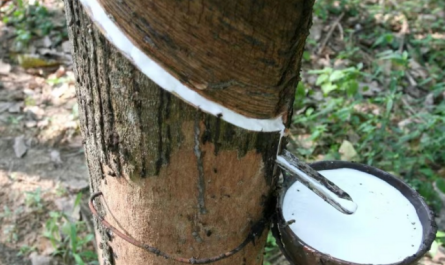
Latex flow from rubber trees is caused by artificial tapping or natural disasters (such as frost damage causing bark cracking and latex flow, wind damage, or mechanical damage causing bark rupture and latex flow).
Under normal circumstances, artificial tapping has a limited impact area. With upward tapping, the latex flow is mainly below and to the sides of the tapping line; with downward tapping, the latex flow is mainly above and to the sides of the tapping line. The affected length is generally 1.25 to 1.75 meters, and the width on both sides of the tapping line is equal to one-ninth of the length.
When ethephon is applied to rubber trees, it induces a wound healing response, which is a method of exploiting the existing latex production potential.
Its main functions are:
(1) Significantly mobilizing reserves;
(2) Enhancing the absorption of water and nutrients and transporting them to the latex vessel system;
(3) Expanding the latex flow area, inhibiting the coagulation mechanism, strengthening latex flow from the latex vessels, and enhancing the regenerative function of the latex, resulting in a short-term significant increase in yield. However, ethephon itself is not a nutrient and cannot directly increase photosynthetic capacity or increase the production of new sugars. Numerous experiments have shown that the correct application of ethephon to rubber trees is an effective measure to increase rubber yield.
Which rubber trees are suitable for ethephon application?
Like other long-term crops, rubber trees have their seedling stage, initial production stage, peak production stage, and senescence stage. During the seedling stage, the focus is on promoting the growth of the rubber tree, and ethephon stimulation should not be applied at this time; during the initial production stage, the rubber tree needs to both produce latex and grow, so stimulation tapping is generally not recommended; usually, stimulation tapping can be performed when the rubber tree enters its peak production stage (approximately 15 years after planting, or 5-7 years after initial tapping); when the rubber tree reaches senescence and needs to be renewed, the stimulation intensity should be increased to maximize the latex production potential of the rubber tree. How to properly use ethephon to stimulate rubber tapping?
(1) The scope of use must be strictly controlled: Currently, ethephon use is limited to seedling trees over fifteen years old (including low-yielding budded trees) and for intensive tapping before rubber tree renewal; for high-yielding budded trees, it should not be used for production purposes except for experimental purposes.
(2) The dosage must be strictly controlled: The ethephon solution should be prepared and applied according to the specified concentration of the original solution in each batch. The dosage and the number of applications should not be arbitrarily increased.
(3) Reasonable reduction of tapping frequency: Generally, the number of tapping cuts should be reduced by about one-third compared to conventional tapping.
(4) Appropriately shallow tapping: Conventional tapping usually removes 2/3 to 1/2 of the bark (approximately 0.15 cm from the cambium); however, when using ethephon stimulation, the tapping depth should be controlled to remove only 1/2 to 1/3 of the bark (approximately 0.16-0.20 cm from the cambium).
(5) Fertilization should be carried out based on the results of nutritional diagnosis to supplement nutrients.
(6) Master the dynamics of latex production and conduct scientific tapping;
I. Tapping should only begin after the first flush of leaves has straightened and turned dark green each year, and should stop in winter when the leaves begin to turn yellow.
II. Tap according to the weather; no tapping should be done on rainy days; no tapping should be done when the winter temperature is below 15℃; no tapping should be done when the tree trunk is not dry; no tapping should be done during the prevalence of bark canker disease.
III. If the dry rubber content is below 28% in the first half of the year, or below 25% in the second half of the year, tapping should be temporarily suspended; if there are signs of bark necrosis, intermittent tapping should be adopted.
(7) Except for trees undergoing strong tapping for rejuvenation, the increase in yield should be controlled within a reasonable balance between latex production and latex flow.
(8) To improve the effect of stimulation and increase yield while reducing side effects, the method of alternating tapping lines at different heights should be used as much as possible.
What are the methods for using ethephon on rubber trees?
Depending on the carrier (formulation), there are currently three main methods:
(1) Emulsion: Apply the emulsion to the bark below the tapping line (for upward tapping) or above the tapping line (for downward tapping). The width depends on the number of cuts, generally 1.2-1.5 cm along the tapping line, scraping off the rough bark. Then, evenly apply the prepared ethephon emulsion to the scraped bark area with a brush.
(2) Aqueous solution or paste: Instead of scraping the bark, after removing the latex, evenly apply the prepared ethephon aqueous solution (or paste) with a brush along the tapping line to a two-centimeter-wide area of bark. (3) Colloidal solution: Used in the same way as emulsions, its advantage is that it can be used immediately after purchase without requiring preparation, but it is only available in one concentration.
48 hours after application, the ethephon will have completely entered the rubber tree, and tapping can begin.
If heavy rain or a downpour occurs within 5 hours of application, reapplication is necessary because the ethephon will not have entered the rubber tree. After 5 hours, even if it rains heavily again, reapplication is not necessary.
What formulations of ethephon should be used for rubber trees?
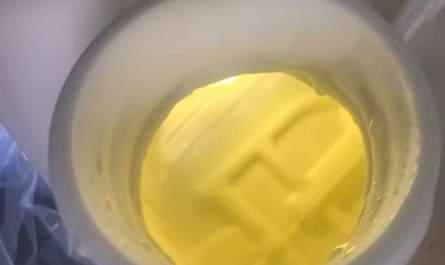
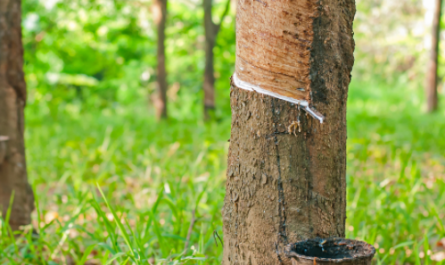
The choice of formulation should consider factors such as the source of materials, efficacy, yield increase, cost, and safety of the rubber trees. Generally, carriers with readily available and inexpensive materials, strong adhesion, and minimal side effects are preferred. In recent years, factories have produced 40% ethephon alcohol solutions and 5-10% colloidal formulations; farmers typically prepare pastes and emulsions themselves.
Aqueous solution: Prepared by directly mixing ethephon concentrate with water according to requirements.
Colloidal solution: In recent years, Shanghai Pengpu Chemical Plant, based on materials used in foreign rubber plantations, has successfully developed a 5-10% colloidal ethephon solution. It has strong adhesion, is not easily washed away by rain, and is convenient to use. It has been tested at the farm affiliated with the South China Academy of Tropical Crops.
Paste: Add 0.5 kg of starch to 50 kg of water, stir well, and boil until a paste is formed. After cooling to room temperature, add the ethephon concentrate and stir well to obtain the paste.
Emulsion: Use palm oil to rosin in a ratio of 1:1.50, or tung oil to rosin in a ratio of 1:2 as a carrier. First, melt and mix the oil and rosin, cool to room temperature, and then add the ethephon concentrate and stir well to obtain the emulsion.
Emulsions are relatively viscous, have strong adhesion, a long duration of efficacy, and good yield increase, but they have more severe side effects, are more expensive, and the materials are more difficult to obtain. Aqueous solutions are less viscous, have poor adhesion, a shorter duration of efficacy, and poorer yield increase, but they have milder side effects, are cheaper, and the materials are readily available. Pastes are intermediate between emulsions and aqueous solutions. Colloidal solutions have strong adhesion, can be purchased ready-made, and do not require self-preparation, making them convenient to use, but they are more expensive.
Latex flow from rubber trees is caused by artificial tapping or natural disasters (such as frost damage causing bark cracking and latex flow, wind damage, or mechanical damage causing bark rupture and latex flow).
Under normal circumstances, artificial tapping has a limited impact area. With upward tapping, the latex flow is mainly below and to the sides of the tapping line; with downward tapping, the latex flow is mainly above and to the sides of the tapping line. The affected length is generally 1.25 to 1.75 meters, and the width on both sides of the tapping line is equal to one-ninth of the length.
When ethephon is applied to rubber trees, it induces a wound healing response, which is a method of exploiting the existing latex production potential.
Its main functions are:
(1) Significantly mobilizing reserves;
(2) Enhancing the absorption of water and nutrients and transporting them to the latex vessel system;
(3) Expanding the latex flow area, inhibiting the coagulation mechanism, strengthening latex flow from the latex vessels, and enhancing the regenerative function of the latex, resulting in a short-term significant increase in yield. However, ethephon itself is not a nutrient and cannot directly increase photosynthetic capacity or increase the production of new sugars. Numerous experiments have shown that the correct application of ethephon to rubber trees is an effective measure to increase rubber yield.
Which rubber trees are suitable for ethephon application?
Like other long-term crops, rubber trees have their seedling stage, initial production stage, peak production stage, and senescence stage. During the seedling stage, the focus is on promoting the growth of the rubber tree, and ethephon stimulation should not be applied at this time; during the initial production stage, the rubber tree needs to both produce latex and grow, so stimulation tapping is generally not recommended; usually, stimulation tapping can be performed when the rubber tree enters its peak production stage (approximately 15 years after planting, or 5-7 years after initial tapping); when the rubber tree reaches senescence and needs to be renewed, the stimulation intensity should be increased to maximize the latex production potential of the rubber tree. How to properly use ethephon to stimulate rubber tapping?
(1) The scope of use must be strictly controlled: Currently, ethephon use is limited to seedling trees over fifteen years old (including low-yielding budded trees) and for intensive tapping before rubber tree renewal; for high-yielding budded trees, it should not be used for production purposes except for experimental purposes.
(2) The dosage must be strictly controlled: The ethephon solution should be prepared and applied according to the specified concentration of the original solution in each batch. The dosage and the number of applications should not be arbitrarily increased.
(3) Reasonable reduction of tapping frequency: Generally, the number of tapping cuts should be reduced by about one-third compared to conventional tapping.
(4) Appropriately shallow tapping: Conventional tapping usually removes 2/3 to 1/2 of the bark (approximately 0.15 cm from the cambium); however, when using ethephon stimulation, the tapping depth should be controlled to remove only 1/2 to 1/3 of the bark (approximately 0.16-0.20 cm from the cambium).
(5) Fertilization should be carried out based on the results of nutritional diagnosis to supplement nutrients.
(6) Master the dynamics of latex production and conduct scientific tapping;
I. Tapping should only begin after the first flush of leaves has straightened and turned dark green each year, and should stop in winter when the leaves begin to turn yellow.
II. Tap according to the weather; no tapping should be done on rainy days; no tapping should be done when the winter temperature is below 15℃; no tapping should be done when the tree trunk is not dry; no tapping should be done during the prevalence of bark canker disease.
III. If the dry rubber content is below 28% in the first half of the year, or below 25% in the second half of the year, tapping should be temporarily suspended; if there are signs of bark necrosis, intermittent tapping should be adopted.
(7) Except for trees undergoing strong tapping for rejuvenation, the increase in yield should be controlled within a reasonable balance between latex production and latex flow.
(8) To improve the effect of stimulation and increase yield while reducing side effects, the method of alternating tapping lines at different heights should be used as much as possible.
What are the methods for using ethephon on rubber trees?
Depending on the carrier (formulation), there are currently three main methods:
(1) Emulsion: Apply the emulsion to the bark below the tapping line (for upward tapping) or above the tapping line (for downward tapping). The width depends on the number of cuts, generally 1.2-1.5 cm along the tapping line, scraping off the rough bark. Then, evenly apply the prepared ethephon emulsion to the scraped bark area with a brush.
(2) Aqueous solution or paste: Instead of scraping the bark, after removing the latex, evenly apply the prepared ethephon aqueous solution (or paste) with a brush along the tapping line to a two-centimeter-wide area of bark. (3) Colloidal solution: Used in the same way as emulsions, its advantage is that it can be used immediately after purchase without requiring preparation, but it is only available in one concentration.
48 hours after application, the ethephon will have completely entered the rubber tree, and tapping can begin.
If heavy rain or a downpour occurs within 5 hours of application, reapplication is necessary because the ethephon will not have entered the rubber tree. After 5 hours, even if it rains heavily again, reapplication is not necessary.
What formulations of ethephon should be used for rubber trees?
The choice of formulation should consider factors such as the source of materials, efficacy, yield increase, cost, and safety of the rubber trees. Generally, carriers with readily available and inexpensive materials, strong adhesion, and minimal side effects are preferred. In recent years, factories have produced 40% ethephon alcohol solutions and 5-10% colloidal formulations; farmers typically prepare pastes and emulsions themselves.
Aqueous solution: Prepared by directly mixing ethephon concentrate with water according to requirements.
Colloidal solution: In recent years, Shanghai Pengpu Chemical Plant, based on materials used in foreign rubber plantations, has successfully developed a 5-10% colloidal ethephon solution. It has strong adhesion, is not easily washed away by rain, and is convenient to use. It has been tested at the farm affiliated with the South China Academy of Tropical Crops.
Paste: Add 0.5 kg of starch to 50 kg of water, stir well, and boil until a paste is formed. After cooling to room temperature, add the ethephon concentrate and stir well to obtain the paste.
Emulsion: Use palm oil to rosin in a ratio of 1:1.50, or tung oil to rosin in a ratio of 1:2 as a carrier. First, melt and mix the oil and rosin, cool to room temperature, and then add the ethephon concentrate and stir well to obtain the emulsion.
Emulsions are relatively viscous, have strong adhesion, a long duration of efficacy, and good yield increase, but they have more severe side effects, are more expensive, and the materials are more difficult to obtain. Aqueous solutions are less viscous, have poor adhesion, a shorter duration of efficacy, and poorer yield increase, but they have milder side effects, are cheaper, and the materials are readily available. Pastes are intermediate between emulsions and aqueous solutions. Colloidal solutions have strong adhesion, can be purchased ready-made, and do not require self-preparation, making them convenient to use, but they are more expensive.