

Use of foliar fertilizer
Crops absorb nutrients primarily through two pathways: root absorption and leaf absorption. Root absorption involves applying fertilizers into the soil, where they come into contact with the roots and are absorbed and utilized by the fine roots or root tips, then transported to the roots, stems, leaves, flowers, and fruits of the crop. Foliar absorption allows nutrients to be obtained directly from the leaves, participating in the crop's metabolism and organic matter synthesis. Both methods are complementary and indispensable.
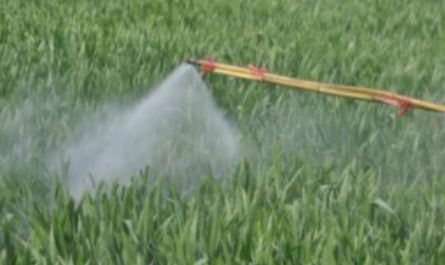
Situations requiring foliar fertilization:
1. When crop roots are aging and their absorption capacity is weakened, foliar fertilizer should be applied.
In the later stages of annual crop growth, root vitality declines, and the ability to absorb nutrients decreases. If topdressing is needed, root application methods are insufficient to meet the crop's needs. In this case, foliar spraying is appropriate. For example, in the later stages of cotton growth, the root system gradually ages, and its ability to absorb nutrients weakens, while the middle and upper bolls are still in the development stage and require a certain supply of nutrients. 1. Scientific application of foliar fertilizers can improve the absorption and utilization of fertilizers by cotton, supplementing nutrients, preventing premature aging, and suppressing diseases, thereby increasing yield and income.
2. Foliar fertilizers should be applied when crops show nutrient deficiencies.
During crop growth, if soil fertilization cannot meet its nutritional needs, deficiency symptoms such as stunted growth and yellowing will appear. At this time, foliar fertilizers can play a role. Foliar fertilizers are fertilizers sprayed directly onto the leaves, allowing crops to quickly absorb nutrients and alleviate deficiencies. Especially for elements easily fixed by the soil, such as phosphorus and copper, foliar fertilizers are more effective and have a higher utilization rate. For example, when vegetables are deficient in micronutrients, foliar fertilizer spraying can restore the greenness of the leaves and their growth vigor.
3. Foliar fertilizers should be applied when crop growth is affected by adverse environmental conditions.
During crop growth, unsuitable soil moisture, pH levels, etc., can hinder root nutrient absorption. When crops urgently need to recover, foliar fertilizers can be effective. For example, during the pod-setting stage of peanuts in the rainy season, if heavy rains cause poor drainage, timely application of foliar fertilizer can promote seedling recovery and increase yield.
4. Use foliar fertilizers to quickly replenish micronutrients.
Some fertilizers, such as phosphorus, iron, manganese, copper, and zinc fertilizers, are easily fixed by soil colloids when applied to the roots, reducing their effectiveness. Foliar spraying is not limited by soil conditions and has advantages such as low fertilizer usage, rapid results, high utilization rate, safety, and no pollution.
5. Apply foliar fertilizers when soil fertilization is difficult.
For crops covered with plastic film, in areas without drip irrigation, if the basal fertilizer application is insufficient, topdressing with soil fertilizer is difficult. In such cases, foliar fertilizers are needed to supplement nutrient needs. Some deep-rooted crops absorb certain nutrients in relatively small amounts. Traditional fertilization methods often fail to reach the root system, hindering nutrient absorption and effectiveness. Foliar spraying, however, can achieve better results.
Situations where foliar fertilization is not recommended:
1. Flowering period: Flowers are delicate and easily damaged by fertilizer.
2. During periods of high temperature and strong sunlight, foliar fertilization can easily cause fertilizer burn.
3. During the seedling stage, when crops are still recovering from transplant shock, it is difficult for them to establish new roots.
RECENT POSTS
-
How do you choose the right plant growth regulator?
-
Which safe and residue-free plant growth regulators meet the requirements of green and organic agricultural production?
-
What is the purpose of COA (Certificate of Analysis) verification for plant growth regulators?
-
How do you evaluate the effectiveness of plant growth regulators?
Featured News