

Recommendations on Plant Growth Regulators and Integrated Field Management for Summer Crop Drought Resistance
For summer crop drought resistance, the preferred choices are Brassinolide, DA-6, Sodium Nitrophenolates (Atonik), and Fulvic Acid-based regulators; combining these with foliar sprays of potassium dihydrogen phosphate yields the best results.

1. Selection and Pairing of Key Regulators
Given the high temperatures and drought conditions of summer, different regulators exhibit distinct characteristics; precise selection based on temperature and crop status is essential:
Brassinolide: Known as the "plant doctor," it repairs damaged cells, coordinates nutrient allocation, and significantly enhances stress resistance. It is suitable for most crops and performs exceptionally well in alleviating phytotoxicity and preserving flowers and fruit.
DA-6: Remains effective at low temperatures (activating at just 5°C) but requires caution during high summer temperatures. It boosts resistance by extending the duration of photosynthesis and is suitable for gradual physiological conditioning.
Sodium Nitrophenolates (Atonik): Acting as a "first responder," it rapidly activates cellular activity within 24 hours. However, use with caution above 30°C to avoid leaf scorch, and note that it becomes ineffective below 15°C. Summer application requires strict temperature control and reduced concentrations.
Fulvic Acid: Water-soluble and acidic, it promotes root growth and enhances the crop's ability to absorb water and nutrients, making it an excellent drought-resistance agent.
2. Optimal Formulas and Application Techniques
The efficacy of using a single regulator is limited; scientific mixing can achieve a synergistic "1+1 > 2" effect for drought resistance:
Drought-Resistance and Efficiency-Boosting Combination: Foliar spray of Fulvic Acid-based drought-resistance agent + 0.3% potassium dihydrogen phosphate + urea. This formulation reduces foliar transpiration, alleviates water stress, and enhances the plant's overall stress resistance.
3. Application Details:
Timing: Best performed in the early morning or late afternoon; avoid midday heat and intense sunlight to prevent rapid evaporation or chemical injury.
Frequency: Apply at regular intervals and in controlled amounts; avoid drastic fluctuations in soil moisture, which can cause tuber cracking or plant stress.
Precautions: Do not mix sodium nitrophenolates with copper sulfate (as neutralization renders them ineffective); avoid mixing brassinolide with Bordeaux mixture.
4. Integrated Field Management Recommendations
In addition to chemical regulation, physical measures are equally critical:
Irrigation and Moisture Supplementation:
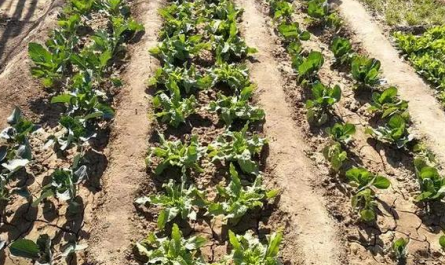
Use drip or sprinkler irrigation (limiting duration to no more than 8 hours) and irrigate to a depth of one-third to one-half the height of the ridges; take care to prevent root rot.
Mulching for Cooling: Cover ridge surfaces with straw or shade netting to lower soil temperature and reduce moisture evaporation.
Pest and Disease Control: High temperatures and drought conditions are conducive to outbreaks of aphids, tobacco whiteflies, and viral diseases; apply agents such as "Virus Wang" (antiviral formulations) or imidacloprid to interrupt transmission.
1. Selection and Pairing of Key Regulators
Given the high temperatures and drought conditions of summer, different regulators exhibit distinct characteristics; precise selection based on temperature and crop status is essential:
Brassinolide: Known as the "plant doctor," it repairs damaged cells, coordinates nutrient allocation, and significantly enhances stress resistance. It is suitable for most crops and performs exceptionally well in alleviating phytotoxicity and preserving flowers and fruit.
DA-6: Remains effective at low temperatures (activating at just 5°C) but requires caution during high summer temperatures. It boosts resistance by extending the duration of photosynthesis and is suitable for gradual physiological conditioning.
Sodium Nitrophenolates (Atonik): Acting as a "first responder," it rapidly activates cellular activity within 24 hours. However, use with caution above 30°C to avoid leaf scorch, and note that it becomes ineffective below 15°C. Summer application requires strict temperature control and reduced concentrations.
Fulvic Acid: Water-soluble and acidic, it promotes root growth and enhances the crop's ability to absorb water and nutrients, making it an excellent drought-resistance agent.
2. Optimal Formulas and Application Techniques
The efficacy of using a single regulator is limited; scientific mixing can achieve a synergistic "1+1 > 2" effect for drought resistance:
Drought-Resistance and Efficiency-Boosting Combination: Foliar spray of Fulvic Acid-based drought-resistance agent + 0.3% potassium dihydrogen phosphate + urea. This formulation reduces foliar transpiration, alleviates water stress, and enhances the plant's overall stress resistance.
3. Application Details:
Timing: Best performed in the early morning or late afternoon; avoid midday heat and intense sunlight to prevent rapid evaporation or chemical injury.
Frequency: Apply at regular intervals and in controlled amounts; avoid drastic fluctuations in soil moisture, which can cause tuber cracking or plant stress.
Precautions: Do not mix sodium nitrophenolates with copper sulfate (as neutralization renders them ineffective); avoid mixing brassinolide with Bordeaux mixture.
4. Integrated Field Management Recommendations
In addition to chemical regulation, physical measures are equally critical:
Irrigation and Moisture Supplementation:
Use drip or sprinkler irrigation (limiting duration to no more than 8 hours) and irrigate to a depth of one-third to one-half the height of the ridges; take care to prevent root rot.
Mulching for Cooling: Cover ridge surfaces with straw or shade netting to lower soil temperature and reduce moisture evaporation.
Pest and Disease Control: High temperatures and drought conditions are conducive to outbreaks of aphids, tobacco whiteflies, and viral diseases; apply agents such as "Virus Wang" (antiviral formulations) or imidacloprid to interrupt transmission.
RECENT POSTS
-
13th National Plant Growth Regulator Industry Conference Held in Hebi Henan
-
Key Innovation Directions for Plant Hormone Technologies
-
Latest Growth Forecast for the Southeast Asian Plant Growth Regulator Market
-
Experiments have demonstrated excellent results using the plant hormone "Pineapple King" in Vietnamese pineapple cultivation
Featured News