

Uniconazole packing and shipping
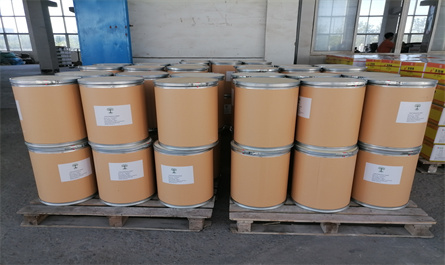
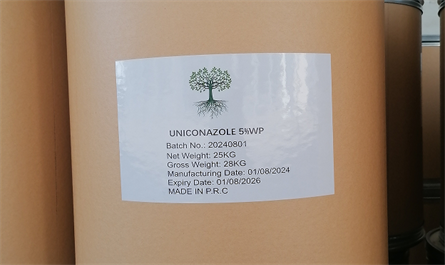
Uniconazole is a broad-spectrum, highly effective plant growth regulator with both bactericidal and herbicidal effects.
It is a gibberellin synthesis inhibitor. It has the effects of controlling vegetative growth, inhibiting cell elongation, shortening internodes, dwarfing plants, promoting lateral bud growth and flower bud formation, and enhancing stress resistance. Its activity is 6-10 times higher than that of paclobutrazol, but its residue in the soil is only 1/10 of that of paclobutrazol, so it has little effect on subsequent crops.
It can be absorbed by seeds, roots, buds, and leaves, and circulate between organs, but less leaves absorb and circulate outward. It has obvious apical tendency. It is suitable for rice and wheat to increase tillering, control plant height, and improve lodging resistance.
It is used to control the tree shape of vegetative growth in fruit trees. It is used to control plant shape of ornamental plants, promote flower bud differentiation and more flowering, etc.
RECENT POSTS
-
13th National Plant Growth Regulator Industry Conference Held in Hebi Henan
-
Key Innovation Directions for Plant Hormone Technologies
-
Latest Growth Forecast for the Southeast Asian Plant Growth Regulator Market
-
Experiments have demonstrated excellent results using the plant hormone "Pineapple King" in Vietnamese pineapple cultivation
Featured News