

How can basal fertilizers be applied most effectively?
Regarding application rates, the specific amounts of various fertilizers used as basal fertilizer should be determined based on factors such as local long-term field trial results and target yields.
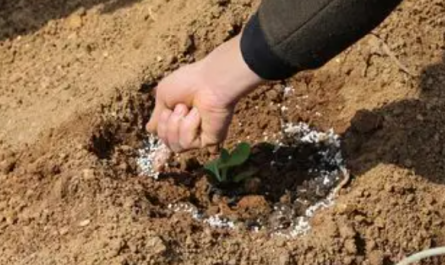
Generally, for high-fertility soils, about 30% of the total nitrogen fertilizer is applied as basal fertilizer, whereas for medium- to low-fertility soils, this figure ranges from 50% to 70%; meanwhile, phosphorus, potassium, and micronutrient fertilizers should ideally be applied entirely as basal fertilizer in a single application.
In terms of fertilizer types, suitable options for basal application include ammonium bicarbonate (nitrogen); ordinary superphosphate, diammonium phosphate (DAP), calcium-magnesium-phosphate fertilizer, and triple superphosphate (phosphorus); potassium chloride, potassium sulfate, and plant ash (potassium); and zinc and manganese fertilizers (micronutrients).
Regarding application depth, basal fertilizers should generally be placed within the cultivated soil layer—specifically at a depth of 15–20 cm. Organic fertilizers, nitrogen, potassium, and micronutrients can be mixed, spread evenly across the soil surface, and then immediately plowed into the soil to ensure uniform mixing throughout the cultivated layer.
Due to their poor mobility, phosphorus fertilizers should be applied in two layers: the lower layer at a depth of 15–20 cm and the upper layer at a depth of approximately 5 cm.
Generally, for high-fertility soils, about 30% of the total nitrogen fertilizer is applied as basal fertilizer, whereas for medium- to low-fertility soils, this figure ranges from 50% to 70%; meanwhile, phosphorus, potassium, and micronutrient fertilizers should ideally be applied entirely as basal fertilizer in a single application.
In terms of fertilizer types, suitable options for basal application include ammonium bicarbonate (nitrogen); ordinary superphosphate, diammonium phosphate (DAP), calcium-magnesium-phosphate fertilizer, and triple superphosphate (phosphorus); potassium chloride, potassium sulfate, and plant ash (potassium); and zinc and manganese fertilizers (micronutrients).
Regarding application depth, basal fertilizers should generally be placed within the cultivated soil layer—specifically at a depth of 15–20 cm. Organic fertilizers, nitrogen, potassium, and micronutrients can be mixed, spread evenly across the soil surface, and then immediately plowed into the soil to ensure uniform mixing throughout the cultivated layer.
Due to their poor mobility, phosphorus fertilizers should be applied in two layers: the lower layer at a depth of 15–20 cm and the upper layer at a depth of approximately 5 cm.