

Which Plant Growth Regulators Should Be Used for Seed Dressing to Promote Rooting and Germination?
For seed dressing aimed at promoting rooting and germination, we recommend using Brassinolide, Gibberellic Acid (GA₃), and Sodium Nitrophenolates. These plant growth regulators effectively break seed dormancy, increase germination rates, and stimulate root system development, resulting in uniform and robust seedling growth.

1. Brassinolide
It functions to promote seed germination, accelerate rooting, and foster a well-developed root system, while simultaneously enhancing the seedlings' resistance to cold and drought.
Application Method: For every mu (approx. 0.067 hectares) of land, mix 5–10 ml of 0.01% Brassinolide soluble liquid with 200–300 ml of water for dilution. Thoroughly mix this solution with seeds—such as wheat or corn—allow them to air-dry, and then proceed with sowing.
Results:** Significantly boosts the emergence rate; results in a more developed root system and uniform, vigorous growth during the seedling stage.
2. Gibberellic Acid (GA3)
It is capable of breaking seed dormancy, stimulating coleoptile elongation, and promoting germination. It is particularly suitable for use with aged seeds or when sowing in low-temperature environments.
Application Method: For crops such as rice and barley, soak seeds in a 1 mg/kg GA3 solution for 6–12 hours; for potato tubers, soak in a 0.5–1 mg/kg solution for 30 minutes.
Note:Excessive concentrations may lead to etiolation (abnormal stem elongation); therefore, the dosage must be strictly controlled.
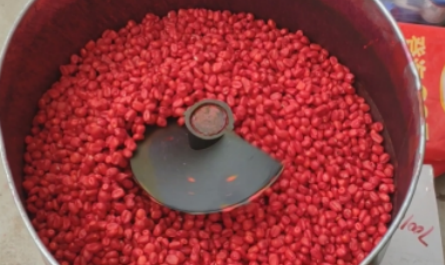
3. Sodium Nitrophenolates (Atonik)
It breaks dormancy, promotes root development and seedling vigor, and improves the uniformity of seedling emergence. It is particularly effective for seeds subjected to low-temperature stress.
Application Method: Prepare a 6000-fold dilution of 1.8% Atonik solution; soak the seeds in this solution for 12 hours, allow them to air-dry, and then sow.
Advantages:Sodium Nitrophenolates (Atonik) can be mixed with fungicides, offering the dual benefit of both disease prevention and growth promotion.
1. Brassinolide
It functions to promote seed germination, accelerate rooting, and foster a well-developed root system, while simultaneously enhancing the seedlings' resistance to cold and drought.
Application Method: For every mu (approx. 0.067 hectares) of land, mix 5–10 ml of 0.01% Brassinolide soluble liquid with 200–300 ml of water for dilution. Thoroughly mix this solution with seeds—such as wheat or corn—allow them to air-dry, and then proceed with sowing.
Results:** Significantly boosts the emergence rate; results in a more developed root system and uniform, vigorous growth during the seedling stage.
2. Gibberellic Acid (GA3)
It is capable of breaking seed dormancy, stimulating coleoptile elongation, and promoting germination. It is particularly suitable for use with aged seeds or when sowing in low-temperature environments.
Application Method: For crops such as rice and barley, soak seeds in a 1 mg/kg GA3 solution for 6–12 hours; for potato tubers, soak in a 0.5–1 mg/kg solution for 30 minutes.
Note:Excessive concentrations may lead to etiolation (abnormal stem elongation); therefore, the dosage must be strictly controlled.
3. Sodium Nitrophenolates (Atonik)
It breaks dormancy, promotes root development and seedling vigor, and improves the uniformity of seedling emergence. It is particularly effective for seeds subjected to low-temperature stress.
Application Method: Prepare a 6000-fold dilution of 1.8% Atonik solution; soak the seeds in this solution for 12 hours, allow them to air-dry, and then sow.
Advantages:Sodium Nitrophenolates (Atonik) can be mixed with fungicides, offering the dual benefit of both disease prevention and growth promotion.
RECENT POSTS
-
Classification and Application Value of Plant Growth Regulators
-
Plant Growth Regulators for Controlling Excessive Growth and Preventing Lodging: Functions and Mechanisms
-
Plant Growth Regulators for Growth Promotion and Stress Resistance: Functions and Mechanisms
-
How do you choose the right plant growth regulator?
Featured News