

Management Strategies and Recommended Plant Growth Regulators for the Potato Seedling Stage
The core objective of management during the potato seedling stage is to "promote root development and strengthen seedlings, control excessive vegetative growth while preventing disease, and scientifically balance above-ground and underground growth." Management during this phase directly determines the subsequent number of tubers and their potential for enlargement. In alignment with your ongoing efforts to optimize cultivation techniques, the following is a targeted, refined management plan.
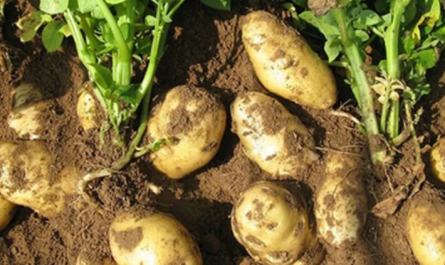
I. Key Management Measures for the Seedling Stage (From Emergence to the Rosette Stage; approx. 15–20 days)
Breaking the Mulch Film to Release Seedlings + Earthing Up to Conserve Heat
For plastic-mulched cultivation, the film must be broken in a timely manner to release emerging seedlings, thereby preventing heat scorching caused by high temperatures under the film. Subsequently, fine soil should be used to tightly seal the holes in the film to raise soil temperature, conserve moisture, and suppress weeds.
Inter-tillage and Soil Loosening + Earthing Up to Promote Root Growth
From the time of emergence until the seedlings develop 7–8 true leaves, perform frequent inter-tillage to loosen the soil, raise soil temperature, and stimulate root system development.
In conjunction with inter-tillage, perform the first round of earthing up (hilling). Build up the height of the ridges to facilitate the lateral growth of stolons and promote tuber formation.
Water Management: Keep It Slightly Dry Rather Than Wet; Prevent Waterlogging
Seedlings require relatively little water during this stage; maintaining soil moisture content at 60%–70% of field capacity is sufficient. In regions prone to heavy spring rains, take advantage of sunny intervals to clear drainage ditches and prevent waterlogging damage to the potato seedlings.
Top-dressing to Boost Seedling Growth: Fertilize Based on Seedling Vigor; Synergize Nitrogen and Potassium
Once seedlings have emerged uniformly, apply a top-dressing of 5–6 kg of urea plus 5–8 kg of potassium sulfate per acre to boost seedling growth.
If the basal fertilizer application was sufficient and the seedlings appear vigorous, top-dressing may be omitted. For weak seedlings, apply a foliar spray of monopotassium phosphate (200 g per *mu* diluted in 60 kg of water) 1–2 times.
Early Prevention and Control of Pests and Diseases
Late Blight: If temperatures exceed 18°C and are accompanied by overcast or rainy weather, spray Mancozeb as a preventive measure. If focal disease plants are discovered, immediately uproot them and implement containment and treatment protocols. II. Recommended Plant Growth Regulators and Application Guidelines
Plant Growth Regulator: Monopotassium Phosphate (Functional Regulator)
Primary Functions: Replenishes phosphorus and potassium nutrients, enhances photosynthesis, promotes root system development, and improves stress resistance.
Recommended Application Period: During the seedling stage, specifically for weak seedlings or when root development is poor.
Application Method and Precautions: Apply via foliar spray using a 0.3% solution (mix 200 grams per acre with 60 liters of water). Apply once every 7–10 days, for a total of 1–2 consecutive applications.
Use with caution on vigorous seedlings to avoid excessive vegetative growth (etiolation).

Plant Growth Regulator: Paclobutrazol (Paclo)
Primary Functions:Paclobutrazol inhibits excessive vegetative growth (stem and leaf elongation), promotes the translocation of nutrients to underground parts, and serves to control vigorous growth while stimulating tuber formation.
Recommended Application Timing:From the early budding stage to the initial flowering stage (considered the "golden period" for controlling vigorous growth).
Application Method and Precautions: Mix 40–60 grams of 15% Paclobutrazol Wettable Powder per acre with water and apply as a spray; focus the application specifically on the apical growth points.
Note: Do not apply too early, as this may inhibit normal plant development.
Plant Growth Regulator: Mepiquat Chloride
Primary Functions: Mepiquat Chloride regulates endogenous plant hormones, suppresses apical dominance, and helps prevent lodging (stem collapse).
Recommended Application Timing: When a tendency toward excessive vegetative growth is observed prior to the budding stage.
Application Method and Precautions: Mix 20 mL of 250 g/L Mepiquat Chloride Aqueous Solution with 20 kg of water per acre, and apply evenly as a spray.
Plant Growth Regulator: Brassinolide
Primary Functions: Brassinolide enhances stress resistance, alleviates the effects of low-temperature stress, and promotes cell division.
Recommended Application Timing:Before or after a cold wave, or during the recovery period for weak seedlings.
Application Method and Precautions: Apply 10 mL of 0.01% Brassinolide Aqueous Solution per acre as a foliar spray; it may be mixed with Monopotassium Phosphate to enhance efficacy.
I. Key Management Measures for the Seedling Stage (From Emergence to the Rosette Stage; approx. 15–20 days)
Breaking the Mulch Film to Release Seedlings + Earthing Up to Conserve Heat
For plastic-mulched cultivation, the film must be broken in a timely manner to release emerging seedlings, thereby preventing heat scorching caused by high temperatures under the film. Subsequently, fine soil should be used to tightly seal the holes in the film to raise soil temperature, conserve moisture, and suppress weeds.
Inter-tillage and Soil Loosening + Earthing Up to Promote Root Growth
From the time of emergence until the seedlings develop 7–8 true leaves, perform frequent inter-tillage to loosen the soil, raise soil temperature, and stimulate root system development.
In conjunction with inter-tillage, perform the first round of earthing up (hilling). Build up the height of the ridges to facilitate the lateral growth of stolons and promote tuber formation.
Water Management: Keep It Slightly Dry Rather Than Wet; Prevent Waterlogging
Seedlings require relatively little water during this stage; maintaining soil moisture content at 60%–70% of field capacity is sufficient. In regions prone to heavy spring rains, take advantage of sunny intervals to clear drainage ditches and prevent waterlogging damage to the potato seedlings.
Top-dressing to Boost Seedling Growth: Fertilize Based on Seedling Vigor; Synergize Nitrogen and Potassium
Once seedlings have emerged uniformly, apply a top-dressing of 5–6 kg of urea plus 5–8 kg of potassium sulfate per acre to boost seedling growth.
If the basal fertilizer application was sufficient and the seedlings appear vigorous, top-dressing may be omitted. For weak seedlings, apply a foliar spray of monopotassium phosphate (200 g per *mu* diluted in 60 kg of water) 1–2 times.
Early Prevention and Control of Pests and Diseases
Late Blight: If temperatures exceed 18°C and are accompanied by overcast or rainy weather, spray Mancozeb as a preventive measure. If focal disease plants are discovered, immediately uproot them and implement containment and treatment protocols. II. Recommended Plant Growth Regulators and Application Guidelines
Plant Growth Regulator: Monopotassium Phosphate (Functional Regulator)
Primary Functions: Replenishes phosphorus and potassium nutrients, enhances photosynthesis, promotes root system development, and improves stress resistance.
Recommended Application Period: During the seedling stage, specifically for weak seedlings or when root development is poor.
Application Method and Precautions: Apply via foliar spray using a 0.3% solution (mix 200 grams per acre with 60 liters of water). Apply once every 7–10 days, for a total of 1–2 consecutive applications.
Use with caution on vigorous seedlings to avoid excessive vegetative growth (etiolation).
Plant Growth Regulator: Paclobutrazol (Paclo)
Primary Functions:Paclobutrazol inhibits excessive vegetative growth (stem and leaf elongation), promotes the translocation of nutrients to underground parts, and serves to control vigorous growth while stimulating tuber formation.
Recommended Application Timing:From the early budding stage to the initial flowering stage (considered the "golden period" for controlling vigorous growth).
Application Method and Precautions: Mix 40–60 grams of 15% Paclobutrazol Wettable Powder per acre with water and apply as a spray; focus the application specifically on the apical growth points.
Note: Do not apply too early, as this may inhibit normal plant development.
Plant Growth Regulator: Mepiquat Chloride
Primary Functions: Mepiquat Chloride regulates endogenous plant hormones, suppresses apical dominance, and helps prevent lodging (stem collapse).
Recommended Application Timing: When a tendency toward excessive vegetative growth is observed prior to the budding stage.
Application Method and Precautions: Mix 20 mL of 250 g/L Mepiquat Chloride Aqueous Solution with 20 kg of water per acre, and apply evenly as a spray.
Plant Growth Regulator: Brassinolide
Primary Functions: Brassinolide enhances stress resistance, alleviates the effects of low-temperature stress, and promotes cell division.
Recommended Application Timing:Before or after a cold wave, or during the recovery period for weak seedlings.
Application Method and Precautions: Apply 10 mL of 0.01% Brassinolide Aqueous Solution per acre as a foliar spray; it may be mixed with Monopotassium Phosphate to enhance efficacy.
RECENT POSTS
Featured News