

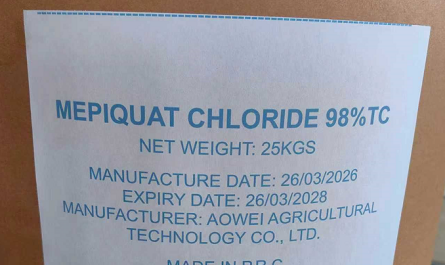
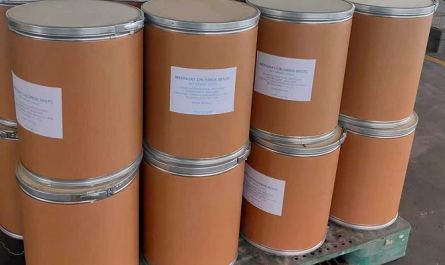
2000KG Mepiquat chloride deliver to vietnam customer
Mepiquat chloride
CAS NO.: 24307-26-4
Appearance:white to slight yellow powder
Formulation:98% TC, 25%SL
Mepiquat chloride is a plant growth regulator primarily used to control excessive vegetative growth in crops, promote reproductive growth, and enhance stress resistance and yield. By inhibiting gibberellin synthesis and regulating the balance of endogenous plant hormones, it fosters robust stems, thickened leaves, and improved photosynthetic efficiency; consequently, it is widely applied to crops such as cotton, wheat, and maize.
1. Mepiquat chloride inhibits excessive vegetative growth: It achieves this by suppressing the biosynthesis of gibberellins within the plant, thereby reducing the rate of cell elongation, shortening internode lengths, and preventing the overgrowth of stems and foliage.
2. Mepiquat chloride regulates hormonal balance: It increases the levels of cytokinins and ethylene, thereby promoting root system development and flower bud differentiation, and harmonizing the relationship between vegetative and reproductive growth.
3. Mepiquat chloride enhances stress resistance: It improves the plant's tolerance to various environmental stresses—including drought, high temperatures, and pests and diseases—while simultaneously reducing the risk of lodging.
CAS NO.: 24307-26-4
Appearance:white to slight yellow powder
Formulation:98% TC, 25%SL
Mepiquat chloride is a plant growth regulator primarily used to control excessive vegetative growth in crops, promote reproductive growth, and enhance stress resistance and yield. By inhibiting gibberellin synthesis and regulating the balance of endogenous plant hormones, it fosters robust stems, thickened leaves, and improved photosynthetic efficiency; consequently, it is widely applied to crops such as cotton, wheat, and maize.
1. Mepiquat chloride inhibits excessive vegetative growth: It achieves this by suppressing the biosynthesis of gibberellins within the plant, thereby reducing the rate of cell elongation, shortening internode lengths, and preventing the overgrowth of stems and foliage.
2. Mepiquat chloride regulates hormonal balance: It increases the levels of cytokinins and ethylene, thereby promoting root system development and flower bud differentiation, and harmonizing the relationship between vegetative and reproductive growth.
3. Mepiquat chloride enhances stress resistance: It improves the plant's tolerance to various environmental stresses—including drought, high temperatures, and pests and diseases—while simultaneously reducing the risk of lodging.
RECENT POSTS
-
13th National Plant Growth Regulator Industry Conference Held in Hebi Henan
-
Key Innovation Directions for Plant Hormone Technologies
-
Latest Growth Forecast for the Southeast Asian Plant Growth Regulator Market
-
Experiments have demonstrated excellent results using the plant hormone "Pineapple King" in Vietnamese pineapple cultivation
Featured News