

Key Points for July Rice Field Management
As July begins, temperatures rise and rainfall becomes abundant across the country, marking a period of rapid crop growth. July is a critical month for rice; achieving high yields requires scientific field management. Here are five key points for managing rice fields during this time:
1. Irrigation and Drainage
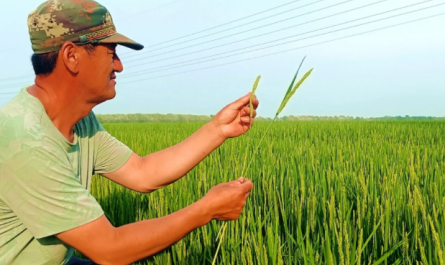
By mid-July, rice enters the booting stage, a time when water availability is a decisive factor for yield. In areas with good water sources, a "day-irrigation, night-drainage" strategy can be adopted. It is particularly important to maintain deep water levels during the booting stage to protect the crop; the water supply should not be interrupted, as this prevents issues such as increased empty grains and reduced seed-setting rates caused by high temperatures, low temperatures, or drought.
2. Appropriate Top-Dressing
Applying "panicle fertilizer" (fertilizer applied at the booting stage) is the final cultivation measure to boost rice yields. Application should be tailored to specific field conditions and crop growth. Generally, apply 3–8 kg of urea and 5–8 kg of potassium chloride per mu, or an equivalent amount of specialized compound fertilizer for rice.
3. Preventing Lodging
If rice fields suffer from prolonged drought and soil cracking, subsequent irrigation causes roots to concentrate near the soil surface and the mud layer to soften, making the crop prone to lodging (falling over) later in the season. Therefore, when applying panicle fertilizer, it is crucial to supplement with potassium to enhance the plant's resistance to lodging.
4. Pest and Disease Control
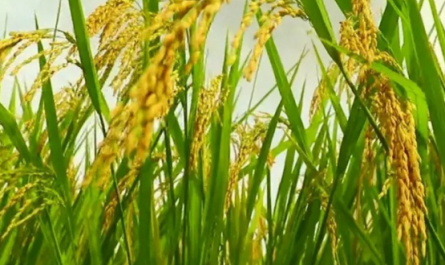
Once rice enters the young panicle differentiation stage, it becomes highly susceptible to various pests and diseases. This period marks the onset of damage from issues such as stem borers, rice blast, and sheath blight. Timely and accurate application of pesticides is essential based on specific conditions.
(1) For rice stem borers (specifically the striped stem borer/Chilo suppressalis), insecticides such as *Shoshuang* (monosultap) or Regent (fipronil) are recommended.
(2) For the small brown planthopper, standard insecticides such as imidacloprid, pymetrozine, or veratrine are recommended.
(3) For sheath blight, spraying with fungicides such as tricyclazole or isoprothiolane is recommended.
(4) Control for rice false smut is typically carried out from late July to early August. Recommended fungicides include copper succinate suspension concentrate, carbendazim, and validamycin; these should be sprayed evenly to ensure full coverage without missing any areas. Spray once every 7 to 10 days, for a total of 2 to 3 consecutive applications. To prevent the development of pesticide resistance, these agents may be used in rotation.
(5) Control of rice leaf miners: Recommended agents include lambda-cyhalothrin, quinalphos, imidacloprid, and cyromazine.
5. Field weeding
Generally, herbicides are applied 20 to 30 days after rice transplanting. Applying herbicides after the tillering stage can interfere with panicle differentiation; therefore, manual weeding is recommended at this stage, and the use of herbicides should be avoided if possible.
1. Irrigation and Drainage
By mid-July, rice enters the booting stage, a time when water availability is a decisive factor for yield. In areas with good water sources, a "day-irrigation, night-drainage" strategy can be adopted. It is particularly important to maintain deep water levels during the booting stage to protect the crop; the water supply should not be interrupted, as this prevents issues such as increased empty grains and reduced seed-setting rates caused by high temperatures, low temperatures, or drought.
2. Appropriate Top-Dressing
Applying "panicle fertilizer" (fertilizer applied at the booting stage) is the final cultivation measure to boost rice yields. Application should be tailored to specific field conditions and crop growth. Generally, apply 3–8 kg of urea and 5–8 kg of potassium chloride per mu, or an equivalent amount of specialized compound fertilizer for rice.
3. Preventing Lodging
If rice fields suffer from prolonged drought and soil cracking, subsequent irrigation causes roots to concentrate near the soil surface and the mud layer to soften, making the crop prone to lodging (falling over) later in the season. Therefore, when applying panicle fertilizer, it is crucial to supplement with potassium to enhance the plant's resistance to lodging.
4. Pest and Disease Control
Once rice enters the young panicle differentiation stage, it becomes highly susceptible to various pests and diseases. This period marks the onset of damage from issues such as stem borers, rice blast, and sheath blight. Timely and accurate application of pesticides is essential based on specific conditions.
(1) For rice stem borers (specifically the striped stem borer/Chilo suppressalis), insecticides such as *Shoshuang* (monosultap) or Regent (fipronil) are recommended.
(2) For the small brown planthopper, standard insecticides such as imidacloprid, pymetrozine, or veratrine are recommended.
(3) For sheath blight, spraying with fungicides such as tricyclazole or isoprothiolane is recommended.
(4) Control for rice false smut is typically carried out from late July to early August. Recommended fungicides include copper succinate suspension concentrate, carbendazim, and validamycin; these should be sprayed evenly to ensure full coverage without missing any areas. Spray once every 7 to 10 days, for a total of 2 to 3 consecutive applications. To prevent the development of pesticide resistance, these agents may be used in rotation.
(5) Control of rice leaf miners: Recommended agents include lambda-cyhalothrin, quinalphos, imidacloprid, and cyromazine.
5. Field weeding
Generally, herbicides are applied 20 to 30 days after rice transplanting. Applying herbicides after the tillering stage can interfere with panicle differentiation; therefore, manual weeding is recommended at this stage, and the use of herbicides should be avoided if possible.