

Using Plant Growth Regulators to Enhance Pineapple Flavor and Yield
When registered plant growth regulators are used appropriately and in compliance with regulations, it is entirely possible to significantly increase pineapple yields while maintaining—or even enhancing—flavor. Conversely, indiscriminate use, excessive concentrations, or improper timing can severely compromise the fruit's taste and quality, leading to issues such as a hard core, bland flavor, or an unpleasant, sharp, and astringent taste.
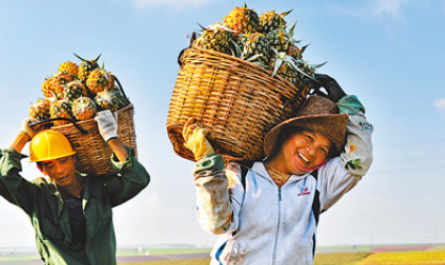
Yield-Enhancing Strategies
A three-stage application protocol—utilizing a mixture of gibberellin, naphthaleneacetic acid (or its sodium salt), and nutritional fertilizers—can be implemented during key growth phases: after the emergence of the pineapple inflorescence (bolting), during the mid-to-late flowering stage, and throughout the early and mid-stages of fruit enlargement. This approach can boost annual yields by an average of 19.36% to 27.87%, resulting in heavier individual fruits, uniform fruit expansion, and a significant reduction in the proportion of malformed fruit.
Applying a mixture of 250–500 mg/L ethephon and 2% urea into the heart of the plant (the "crown" or center) can induce more uniform flowering. This prevents the uneven, staggered flowering often seen in natural conditions, facilitates standardized field management, and ultimately leads to a substantial increase in the total yield of marketable fruit.
Propagation treatments can increase the number of vegetative buds produced per mother plant—from the typical 5–6 buds to as many as 15–25. This drastically lowers the cost of producing planting stock, indirectly enabling larger-scale cultivation and higher total production.
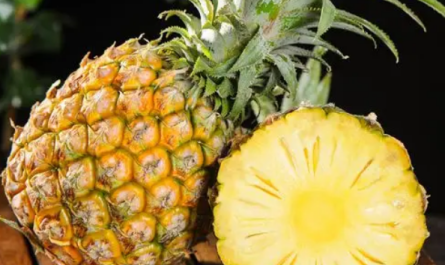
Optimizing Pineapple Flavor
Treating young pineapple fruit with a low concentration of 6-BA (a type of cytokinin) during the cell-division phase of fruit development increases the number of pulp cells. This promotes the uniform accumulation of sugars, raises the content of soluble solids, improves the sugar-to-acid ratio, and results in fruit that is crispier, sweeter, and juicier. Strictly control the timing of artificial ripening: wait until the fruit has reached at least 70% maturity—indicated by a color shift from deep green to a lighter, "mung-bean" green—before applying a low-concentration (500–800 mg/L) ethephon spray to the fruit surface. This ensures uniform ripening and consistent coloration, while allowing the flesh to develop its full, natural flavor profile; it also prevents the sour, astringent, or bland taste that often results from ripening fruit that was harvested too early.
Applying a low-concentration (15–20 mg/L) solution of naphthaleneacetic acid (NAA) into the heart of the plant can synchronize the flowering period. This leads to uniform subsequent fruit development, preventing the inconsistent flavor quality that arises when some fruits fail to develop fully, and significantly improving the overall flavor consistency of the harvest.
Yield-Enhancing Strategies
A three-stage application protocol—utilizing a mixture of gibberellin, naphthaleneacetic acid (or its sodium salt), and nutritional fertilizers—can be implemented during key growth phases: after the emergence of the pineapple inflorescence (bolting), during the mid-to-late flowering stage, and throughout the early and mid-stages of fruit enlargement. This approach can boost annual yields by an average of 19.36% to 27.87%, resulting in heavier individual fruits, uniform fruit expansion, and a significant reduction in the proportion of malformed fruit.
Applying a mixture of 250–500 mg/L ethephon and 2% urea into the heart of the plant (the "crown" or center) can induce more uniform flowering. This prevents the uneven, staggered flowering often seen in natural conditions, facilitates standardized field management, and ultimately leads to a substantial increase in the total yield of marketable fruit.
Propagation treatments can increase the number of vegetative buds produced per mother plant—from the typical 5–6 buds to as many as 15–25. This drastically lowers the cost of producing planting stock, indirectly enabling larger-scale cultivation and higher total production.
Optimizing Pineapple Flavor
Treating young pineapple fruit with a low concentration of 6-BA (a type of cytokinin) during the cell-division phase of fruit development increases the number of pulp cells. This promotes the uniform accumulation of sugars, raises the content of soluble solids, improves the sugar-to-acid ratio, and results in fruit that is crispier, sweeter, and juicier. Strictly control the timing of artificial ripening: wait until the fruit has reached at least 70% maturity—indicated by a color shift from deep green to a lighter, "mung-bean" green—before applying a low-concentration (500–800 mg/L) ethephon spray to the fruit surface. This ensures uniform ripening and consistent coloration, while allowing the flesh to develop its full, natural flavor profile; it also prevents the sour, astringent, or bland taste that often results from ripening fruit that was harvested too early.
Applying a low-concentration (15–20 mg/L) solution of naphthaleneacetic acid (NAA) into the heart of the plant can synchronize the flowering period. This leads to uniform subsequent fruit development, preventing the inconsistent flavor quality that arises when some fruits fail to develop fully, and significantly improving the overall flavor consistency of the harvest.