

Why isn't the brassinolide you bought working well?
Brassinolide has been in use for a long time, available in a wide range of types, grades, and price points. However, some users wonder why the results aren't as miraculous as rumored. Did they buy a counterfeit product, or are they using it incorrectly?
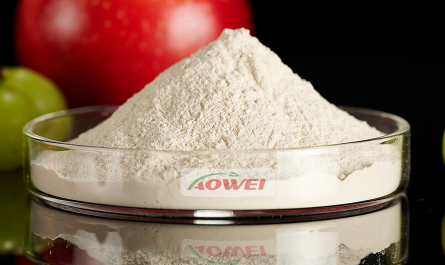
In response to this, many manufacturers began promoting the concept of "pure natural brassinolide." While this type often outperforms products from many other manufacturers, some products without this label yield surprisingly similar results. What is the reason for this?
Natural brassinolide—known as the sixth major plant hormone—does indeed exist and is extracted from plants; its biological activity is 10 to 100 times higher than that of synthetic brassinolide.
Does a label reading "pure natural brassinolide" guarantee it was extracted from plants? Not necessarily.
Because the extraction process for natural brassinolide is complex and costly, truly pure natural brassinolide is extremely rare and carries a high price tag.
So, how do synthetic and natural brassinolides differ?
Although both are called "brassinolide," their molecular structures are so different that they can hardly be considered the same substance. While various brassinolide-like substances can be synthesized through 7–20 steps, none possess a chemical structure identical to that of natural brassinolide. These substances vary in activity levels, yet they all meet regulatory standards and qualify as legitimate products.
A key difference lies in the composition: the extraction process for natural brassinolide preserves various nutrients and endogenous hormones that effectively regulate plant growth. In contrast, synthetic versions retain significant amounts of chemical residues; if the purity of the technical-grade active ingredient is low, the product quality suffers, inevitably leading to poor performance.
In short, a "natural" label doesn't guarantee a natural product, and the absence of such a label doesn't mean it isn't natural. Ultimately, the only way to judge effectiveness is through actual use.
In response to this, many manufacturers began promoting the concept of "pure natural brassinolide." While this type often outperforms products from many other manufacturers, some products without this label yield surprisingly similar results. What is the reason for this?
Natural brassinolide—known as the sixth major plant hormone—does indeed exist and is extracted from plants; its biological activity is 10 to 100 times higher than that of synthetic brassinolide.
Does a label reading "pure natural brassinolide" guarantee it was extracted from plants? Not necessarily.
Because the extraction process for natural brassinolide is complex and costly, truly pure natural brassinolide is extremely rare and carries a high price tag.
So, how do synthetic and natural brassinolides differ?
Although both are called "brassinolide," their molecular structures are so different that they can hardly be considered the same substance. While various brassinolide-like substances can be synthesized through 7–20 steps, none possess a chemical structure identical to that of natural brassinolide. These substances vary in activity levels, yet they all meet regulatory standards and qualify as legitimate products.
A key difference lies in the composition: the extraction process for natural brassinolide preserves various nutrients and endogenous hormones that effectively regulate plant growth. In contrast, synthetic versions retain significant amounts of chemical residues; if the purity of the technical-grade active ingredient is low, the product quality suffers, inevitably leading to poor performance.
In short, a "natural" label doesn't guarantee a natural product, and the absence of such a label doesn't mean it isn't natural. Ultimately, the only way to judge effectiveness is through actual use.