

Grape Growth Critical Period: Application Techniques of Plant Growth Regulators Before and After Flowering
1. Improving Fruit Set Rate in Kyoho Grapes
One week before flowering, combine pinching with spraying with mepiquat chloride (750-1000 mg/L) + chelated boron (1500 times dilution) + chelated zinc (2000 times dilution).
2. Vineyards with Poor Inflorescence Separation Quality Before Flowering (excluding Shine Muscat)
Spray the entire vineyard with 30 ppm sodium nitrophenolate to promote further elongation of the inflorescence and assist in fruit setting before flowering. For 'Shine Muscat' vineyards with uneven flowering or poor inflorescence separation quality, one week before flowering, when the new shoots on the fruiting mother branches have 10-11 leaves, use low concentrations of gibberellic acid and chlorpyrifos to spray the flowers. This will both lengthen the inflorescence and delay fruit drop after flowering. The method is to use 20% gibberellic acid (2.5 mg/L) + 1% chlorpyrifos (1 mg/L) + 200 mg/L streptomycin to spray the inflorescence.
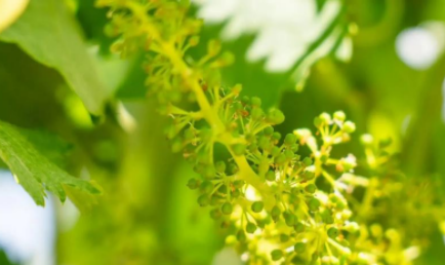
3. Fruit Setting Treatment
Seedless varieties or seeded varieties undergoing seedless treatment, as well as those experiencing extremely adverse weather conditions during the fruit setting period, require fruit setting treatment.
3.1. Treatment for Extremely Adverse Weather Conditions During Flowering
For example, if Summer Black or Shine Muscat grapes experience continuous rainy weather during flowering, it will cause simultaneous flowering and fruit drop, requiring emergency fruit setting measures. For Summer Black, use 20% gibberellic acid (25 mg/L) + 1% thidiazuron (2 mg/L) + 50% streptomycin (4000 times dilution) to dip the flower clusters. For Shine Muscat, use 20% gibberellic acid (12.5 mg/L) + 1% thidiazuron (4 mg/L) + Bio-Protect (3000 times dilution) + 50% streptomycin (4000 times dilution) to dip the flower clusters. Initially, there may be some variation in berry size, but this becomes less noticeable after expansion.
3.2. Fruit Setting Measures Under Normal Weather Conditions
For Summer Black, use 20% gibberellic acid (25 mg/L) + 1% chlorpyrifos (2 mg/L) + 50% streptomycin (4000 times dilution) to dip the flower clusters. For Sunshine Rose grapes, the flower clusters were dipped in a solution containing 20% gibberellic acid (20 mg/L) + 1% thidiazuron (2 mg/L) + Bio-Protect (5000x dilution) + 50% streptomycin (4000x dilution). For Kyoho grapes, the solution used was 20% gibberellic acid (10 mg/L) + 1% chlorpyrifos (2 mg/L) + 0.15% brassinolide (30000x dilution).
3.3. High Temperature Stress and Sunburn Prevention
Sunburn is prone to occur on grape berries and leaves around the hard seed stage. If sunburn occurs, stop all agricultural operations and immediately spray with 10% S-abscisic acid (30000 times dilution) + 500 times dilution of monopotassium phosphate for emergency prevention.
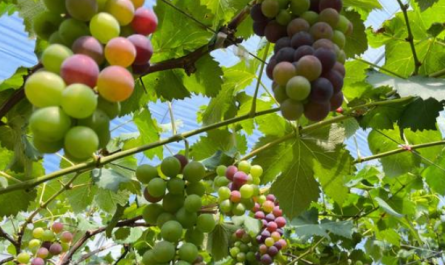
4. Fruit Enlargement Treatment
Plant growth regulators can be used for fruit enlargement treatment 10-12 days after fruit setting in seedless varieties or varieties undergoing seedless treatment. For Summer Black grapes, dip the fruit clusters in a solution of 20% gibberellic acid (50 mg/L) + 1% chlorpyrifos (3 mg/L) + Baomeiling (5000 times dilution) + 50% streptomycin (4000 times dilution). For Shine Muscat grapes, dip the flower clusters in a solution of 20% gibberellic acid (25 mg/L) + 1% chlorpyrifos (5 mg/L) + Baomeiling (5000 times dilution) + 50% streptomycin (4000 times dilution). For Kyoho grapes, dip the fruit clusters in a solution of 20% gibberellic acid (25 mg/L) + 1% chlorpyrifos (5 mg/L) + Baomeiling (5000 times dilution).
Note: After fruit setting and enlargement treatment, control the temperature at 23-27℃, and strengthen fertilizer and water management, especially the use of calcium fertilizer and trace elements.
5. Promoting Flower Bud Differentiation
15 days after flowering, for varieties with difficult flower bud differentiation, such as Zicui Seedless and Crimson Seedless, combine pinching with spraying the new shoots above the fruit clusters with a solution of mepiquat chloride (750 mg/L) + 6-BA (20 mg/L) + monopotassium phosphate (500 times dilution) + chelated boron (1000 times dilution), once every 15 days for two consecutive applications. For one-year-old young trees, pinch the shoots promptly after the beginning of autumn, and spray the entire plant with a solution of mepiquat chloride (1000 mg/L) + 6-BA (20 mg/L) + monopotassium phosphate (500 times dilution) + chelated boron (1000 times dilution), once every 15 days for two consecutive applications. In mid-September, if the degree of lignification of the branches is poor, spray the entire plant with a solution containing mepiquat chloride (1000 mg/L) + 6-BA (20 mg/L) + monopotassium phosphate (500 times dilution) + chelated boron (1000 times dilution) + 40% ethephon (3000 times dilution). This will promote flower bud differentiation and lignification of new shoots.
One week before flowering, combine pinching with spraying with mepiquat chloride (750-1000 mg/L) + chelated boron (1500 times dilution) + chelated zinc (2000 times dilution).
2. Vineyards with Poor Inflorescence Separation Quality Before Flowering (excluding Shine Muscat)
Spray the entire vineyard with 30 ppm sodium nitrophenolate to promote further elongation of the inflorescence and assist in fruit setting before flowering. For 'Shine Muscat' vineyards with uneven flowering or poor inflorescence separation quality, one week before flowering, when the new shoots on the fruiting mother branches have 10-11 leaves, use low concentrations of gibberellic acid and chlorpyrifos to spray the flowers. This will both lengthen the inflorescence and delay fruit drop after flowering. The method is to use 20% gibberellic acid (2.5 mg/L) + 1% chlorpyrifos (1 mg/L) + 200 mg/L streptomycin to spray the inflorescence.
3. Fruit Setting Treatment
Seedless varieties or seeded varieties undergoing seedless treatment, as well as those experiencing extremely adverse weather conditions during the fruit setting period, require fruit setting treatment.
3.1. Treatment for Extremely Adverse Weather Conditions During Flowering
For example, if Summer Black or Shine Muscat grapes experience continuous rainy weather during flowering, it will cause simultaneous flowering and fruit drop, requiring emergency fruit setting measures. For Summer Black, use 20% gibberellic acid (25 mg/L) + 1% thidiazuron (2 mg/L) + 50% streptomycin (4000 times dilution) to dip the flower clusters. For Shine Muscat, use 20% gibberellic acid (12.5 mg/L) + 1% thidiazuron (4 mg/L) + Bio-Protect (3000 times dilution) + 50% streptomycin (4000 times dilution) to dip the flower clusters. Initially, there may be some variation in berry size, but this becomes less noticeable after expansion.
3.2. Fruit Setting Measures Under Normal Weather Conditions
For Summer Black, use 20% gibberellic acid (25 mg/L) + 1% chlorpyrifos (2 mg/L) + 50% streptomycin (4000 times dilution) to dip the flower clusters. For Sunshine Rose grapes, the flower clusters were dipped in a solution containing 20% gibberellic acid (20 mg/L) + 1% thidiazuron (2 mg/L) + Bio-Protect (5000x dilution) + 50% streptomycin (4000x dilution). For Kyoho grapes, the solution used was 20% gibberellic acid (10 mg/L) + 1% chlorpyrifos (2 mg/L) + 0.15% brassinolide (30000x dilution).
3.3. High Temperature Stress and Sunburn Prevention
Sunburn is prone to occur on grape berries and leaves around the hard seed stage. If sunburn occurs, stop all agricultural operations and immediately spray with 10% S-abscisic acid (30000 times dilution) + 500 times dilution of monopotassium phosphate for emergency prevention.
4. Fruit Enlargement Treatment
Plant growth regulators can be used for fruit enlargement treatment 10-12 days after fruit setting in seedless varieties or varieties undergoing seedless treatment. For Summer Black grapes, dip the fruit clusters in a solution of 20% gibberellic acid (50 mg/L) + 1% chlorpyrifos (3 mg/L) + Baomeiling (5000 times dilution) + 50% streptomycin (4000 times dilution). For Shine Muscat grapes, dip the flower clusters in a solution of 20% gibberellic acid (25 mg/L) + 1% chlorpyrifos (5 mg/L) + Baomeiling (5000 times dilution) + 50% streptomycin (4000 times dilution). For Kyoho grapes, dip the fruit clusters in a solution of 20% gibberellic acid (25 mg/L) + 1% chlorpyrifos (5 mg/L) + Baomeiling (5000 times dilution).
Note: After fruit setting and enlargement treatment, control the temperature at 23-27℃, and strengthen fertilizer and water management, especially the use of calcium fertilizer and trace elements.
5. Promoting Flower Bud Differentiation
15 days after flowering, for varieties with difficult flower bud differentiation, such as Zicui Seedless and Crimson Seedless, combine pinching with spraying the new shoots above the fruit clusters with a solution of mepiquat chloride (750 mg/L) + 6-BA (20 mg/L) + monopotassium phosphate (500 times dilution) + chelated boron (1000 times dilution), once every 15 days for two consecutive applications. For one-year-old young trees, pinch the shoots promptly after the beginning of autumn, and spray the entire plant with a solution of mepiquat chloride (1000 mg/L) + 6-BA (20 mg/L) + monopotassium phosphate (500 times dilution) + chelated boron (1000 times dilution), once every 15 days for two consecutive applications. In mid-September, if the degree of lignification of the branches is poor, spray the entire plant with a solution containing mepiquat chloride (1000 mg/L) + 6-BA (20 mg/L) + monopotassium phosphate (500 times dilution) + chelated boron (1000 times dilution) + 40% ethephon (3000 times dilution). This will promote flower bud differentiation and lignification of new shoots.
RECENT POSTS
Featured News