

How to Improve Watermelon Fruit Setting Rate and Prevent Fruit Drop?
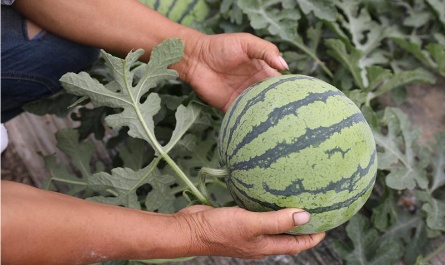
The first batch of watermelons in spring sets fruit early, matures early, and commands a high price. However, unstable spring weather makes fruit setting difficult, leading to a high risk of fruit drop. Improving the fruit setting rate and preventing fruit drop is a primary concern for watermelon growers.
I. What is Watermelon Fruit Drop?
Watermelon fruit drop refers to the stagnation of ovary growth in the plant, starting with the upper part of the young fruit gradually turning yellow and shriveling, eventually resulting in fruit drop.
II. Causes of Watermelon Fruit Drop:
1. Failure of female flowers to be pollinated and fertilized after flowering. Watermelons are monoecious plants with separate male and female flowers. If the flowering period coincides with rainy weather, the pollen will absorb moisture and rupture; or if there are few pollinating insects, the female flowers cannot be properly pollinated, preventing the ovary from expanding and growing normally, causing it to fall off.
2. Abnormalities in the female or male flower organs. For example, a stigma that is too short, the absence of nectar glands, the lack of pollen production in the anthers, or pistil degeneration can all cause watermelon fruit drop.
3. Both excessive and weak plant growth can cause fruit drop. 4. Imbalanced soil moisture during flowering. Excessive water leads to excessive vegetative growth, causing female flowers to malnourished and resulting in fruit abortion. Insufficient water causes the plant to drop flowers due to lack of water.
5. Unfavorable environmental conditions. Temperatures that are too high or too low during flowering are detrimental to pollen tube elongation, leading to poor fertilization and flower drop. Insufficient light hinders photosynthesis, causing the ovary to temporarily suffer from malnutrition and resulting in fruit abortion.
6. Imbalance between vegetative and reproductive growth. Excessive vegetative growth can lead to poor development of female flowers and fruit abortion.
7. Overcrowding. Overcrowding inevitably leads to poor light exposure and excessive vegetative growth, which affects reproductive growth and makes fruit setting difficult.
8. Damage caused by pests and diseases.
III. Methods for preventing and controlling watermelon fruit abortion:
1. Artificial pollination.
1. During the watermelon flowering period, pick the male flowers between 7 and 10 am, remove the corolla, and evenly apply the stamens of the female flowers. Apply the stamens to 2-3 female flowers per male flower. Handle gently during pollination to avoid damaging the stigma.
2. Arrange the sowing period carefully, ensuring the watermelon fruit setting period avoids rainy seasons to facilitate pollination. Provide suitable environmental conditions for seedlings during the seedling stage to promote flower bud differentiation and reduce the chance of deformed flowers.
3. Apply fertilizer and water scientifically.
Apply a heavy base fertilizer before sowing, primarily organic fertilizer, supplemented with quick-acting nitrogen, phosphorus, and potassium fertilizers. Reduce nitrogen fertilizer application appropriately during vine growth and flowering. Follow fertilization principles and control watering appropriately to ensure robust growth and prevent excessive vegetative growth.
4. Control excessive vine growth to reduce unnecessary nutrient consumption.
5. Plant at a reasonable density to ensure ventilation and light penetration.
6. Timely pruning and topping: Pruning not only balances vegetative and reproductive growth but also improves ventilation and light penetration. After fruit set, timely topping concentrates nutrient supply, promoting fruit enlargement.
7. Using plant growth regulators: On the day the female flower opens or the day before, spray the fruit bud with 0.1% Forchlorfenuron. Spray evenly on both sides of the fruit. Generally, at temperatures below 18°C, use approximately 10ml of 0.1% Forchlorfenuron diluted in 1.5kg of water; at 18-24°C, use 10ml diluted in 1.5-2kg of water; and at 25-30°C, use 10ml diluted in 1.5-3kg of water. This promotes fruit setting and increases the fruit set rate.
8. Supplementing with trace elements enhances sweetness and color, protects flowers and fruits, promotes fruit enlargement and growth, and increases yield.
9. Timely prevention and control of pests and diseases.
RECENT POSTS
Featured News