

How to Increase Watermelon Fruit-Setting Rates?
1. Manual Auxiliary Pollination:On sunny mornings between 7:00 AM and 10:00 AM, harvest fully bloomed male flowers. Remove the petals (corolla) and gently dab the pollen from the male flower onto the stigma of the female flower. Perform this operation with care to avoid damaging the stigma.
2. Rational Sowing Schedule: Plan the sowing period so that the flowering and fruit-setting stages occur outside of continuous rainy or overcast seasons, thereby facilitating successful pollination.
3. Scientific and Rational Fertilizer and Water Management:Increase the application of phosphorus, potassium, and organic fertilizers to cultivate robust seedlings. During the flowering stage, carefully control fertilizer and water inputs to prevent excessive vegetative growth of the vines.
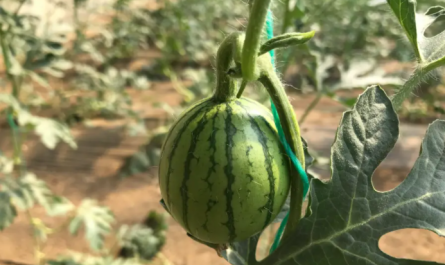
4. Temperature Regulation: Daytime temperatures should not exceed 35°C, while nighttime temperatures should not drop below 13°C. On sunny days, open the greenhouse vents when the internal temperature reaches approximately 20°C, and close them when the temperature rises to around 28°C. On overcast or rainy days, open the vents slightly or keep the greenhouse closed; ensure that humidity is promptly vented after watering.
5. Rational Planting Density: Maintain an appropriate planting density to ensure adequate ventilation and light penetration.
6. Timely Pruning and Pinching:Pruning not only helps balance the conflict between vegetative growth and reproductive growth but also improves ventilation and light conditions. Once the fruit has successfully set, perform timely "pinching" (removing the vine tips) to concentrate nutrient supply toward the young fruit and promote its growth.
7. Timely Pest and Disease Control:Implement prompt measures to prevent and control pests and diseases.
8. Scientific and Rational Use of Plant Growth Regulators: On the morning of the day a female flower opens—or on the day prior—prepare a diluted solution of Pinsoa 0.1% Forchlorfenuron. Uniformly spray the solution onto both the upper and lower surfaces of the developing fruit (ovary). Adjust the dilution ratio according to the temperature: for temperatures below 18°C, mix 5 ml of Pinsoa 0.1% Forchlorfenuron with approximately 0.75 kg of water; for temperatures between 18°C and 24°C, mix 5 ml with 0.75–1 kg of water; and for temperatures between 25°C and 30°C, mix 5 ml with 0.75–1.5 kg of water. Uniformly spraying the surface of the developing fruit in this manner promotes fruit setting and increases the overall fruit-setting rate.
2. Rational Sowing Schedule: Plan the sowing period so that the flowering and fruit-setting stages occur outside of continuous rainy or overcast seasons, thereby facilitating successful pollination.
3. Scientific and Rational Fertilizer and Water Management:Increase the application of phosphorus, potassium, and organic fertilizers to cultivate robust seedlings. During the flowering stage, carefully control fertilizer and water inputs to prevent excessive vegetative growth of the vines.
4. Temperature Regulation: Daytime temperatures should not exceed 35°C, while nighttime temperatures should not drop below 13°C. On sunny days, open the greenhouse vents when the internal temperature reaches approximately 20°C, and close them when the temperature rises to around 28°C. On overcast or rainy days, open the vents slightly or keep the greenhouse closed; ensure that humidity is promptly vented after watering.
5. Rational Planting Density: Maintain an appropriate planting density to ensure adequate ventilation and light penetration.
6. Timely Pruning and Pinching:Pruning not only helps balance the conflict between vegetative growth and reproductive growth but also improves ventilation and light conditions. Once the fruit has successfully set, perform timely "pinching" (removing the vine tips) to concentrate nutrient supply toward the young fruit and promote its growth.
7. Timely Pest and Disease Control:Implement prompt measures to prevent and control pests and diseases.
8. Scientific and Rational Use of Plant Growth Regulators: On the morning of the day a female flower opens—or on the day prior—prepare a diluted solution of Pinsoa 0.1% Forchlorfenuron. Uniformly spray the solution onto both the upper and lower surfaces of the developing fruit (ovary). Adjust the dilution ratio according to the temperature: for temperatures below 18°C, mix 5 ml of Pinsoa 0.1% Forchlorfenuron with approximately 0.75 kg of water; for temperatures between 18°C and 24°C, mix 5 ml with 0.75–1 kg of water; and for temperatures between 25°C and 30°C, mix 5 ml with 0.75–1.5 kg of water. Uniformly spraying the surface of the developing fruit in this manner promotes fruit setting and increases the overall fruit-setting rate.
RECENT POSTS
Featured News