

Measures to Preserve Mango Blossoms and Fruit
The flowering and fruit-setting stages are critical periods in mango production management. Adverse weather, pest and disease damage, or improper fertilizer and water management often lead to significant blossom and fruit drop, resulting in economic losses. Therefore, proactive steps must be taken to ensure normal flowering and fruit development.
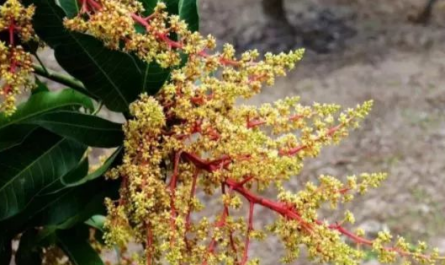
1. Spraying agents to preserve blossoms and fruit:
Spraying 50–100 ppm Gibberellic Acid (GA3)—applied once every 15–20 days after petal fall, for a total of 2–3 applications—can help improve the fruit-setting rate.
2. Supplemental fertilization.
(1) Soil-based fertilization: Apply fertilizer between petal fall and the rapid fruit expansion stage, adjusting the dosage based on tree vigor and fruit load. Fertilization should focus primarily on nitrogen and potassium. For trees under 10 years old, apply 0.3–0.5 kg each of urea and potassium fertilizer per tree; for trees over 10 years old, apply 0.5–1.0 kg of each per tree. Trees with a light fruit load may not require nitrogen; instead, apply only potassium fertilizer at a rate of 0.3–1.0 kg per tree, depending on age. For weak trees carrying a heavy fruit load, an additional appropriate amount of nitrogen and potassium fertilizer can be applied in June during the fruit growth period.
(2) Foliar fertilization: Spray a solution of 0.3% boric acid and 0.2–0.3% potassium dihydrogen phosphate once during each of the following stages: peak bloom, end of bloom, and the young fruit stage.
3. Application of trace elements and calcium.
From flowering through the young fruit stage, lime can be applied to reduce soil acidity and the levels of harmful iron, aluminum, and manganese, while increasing calcium levels. Generally, apply 0.6–0.8 kg of lime per tree, or spray a 2% calcium chloride solution during the period from flowering to fruit set. To promote pollination and fruit set, apply zinc and boron by spraying a solution of 0.2% zinc sulfate and 0.2% borax once each at three times: 10 days before flowering, at peak bloom, and after petal fall. For foliar application, the product can be mixed with pesticides during pest and disease control treatments and combined with irrigation. For soil application, apply 100 g of zinc sulfate and 50 g of borax per tree, in conjunction with N-P-K fertilizers, prior to the emergence of autumn shoots.
4. Promoting coloration.
For varieties that naturally develop a red skin, prune away weak, shaded, diseased, or pest-infested branches during the mid-fruit development stage to ensure the fruit receives adequate sunlight for uniform coloration. Spraying with 70% chinomethionat wettable powder once or twice before bagging helps 'Irwin' mangoes develop a vibrant red appearance; spraying with 50% benomyl wettable powder promotes a tender skin texture and the formation of bloom (waxy coating); and spraying with 80% sulfur wettable powder encourages the development of red-yellow skin tones and the formation of bloom.
5. Fruit bagging.
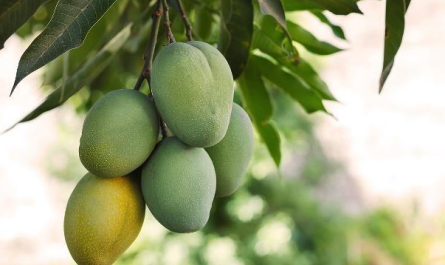
Mango fruit development coincides with the hot, rainy season; bagging is the best method to protect the fruit from pests and diseases. Before bagging, spray the fruit with fungicides and insecticides (or soak the paper bags in the chemical solution beforehand). Secure the bag tightly after application and ensure there is a drainage hole at the bottom to prevent water accumulation.
The ideal time for bagging is after fruit set has stabilized—specifically, after the second wave of physiological fruit drop has ended and the fruit has grown to the size of a chicken egg.
6. Managing flowering shoots.
About two months before flower bud differentiation, remove overcrowded, weak/shaded, and diseased or pest-infested branches, leaving only one or two shoots per branch. This increases light penetration within the canopy, concentrates nutrients, improves ventilation and lighting, promotes flower bud differentiation, and helps prevent pests and diseases.
7. Cultivating and attracting flies for pollination.
Before the longan orchard blooms, pile up refuse or ferment mixtures such as bran with manure, chicken manure, salted fish scraps, and livestock offal to cultivate and attract flies for breeding and pollination. However, relying on flies provides only partial pollination.
8. Fruit thinning and pruning of fruiting branches.
Thin the fruit 15 to 30 days after flowering ends, when the young fruit are the size of peanuts. Retain only two to four fruits per cluster, ideally selecting larger, vibrant green, and vigorous young fruits located centrally. Ensure the remaining fruits are evenly distributed throughout the canopy and along the branches, without touching one another. After physiological fruit drop, the remaining panicle stalks often fail to detach naturally; they should be manually pruned to prevent wind from causing abrasions on the fruit skin, which would spoil its appearance.
RECENT POSTS
Featured News