

How can the flavor of pineapples be optimized from cultivation through harvest?
Optimizing the taste and flavor of pineapples centers on refining the sugar-to-acid ratio and reducing irritating compounds during the cultivation phase, followed by precise post-harvest handling. The ultimate goal is to produce high-quality fruit that is sweet, juicy, low in astringency, and rich in aroma.
Optimizing flavor at the source (cultivation)
Select superior varieties: Choose high-quality cultivars with low levels of fruit proteases and an inherently better sugar-to-acid ratio. Such varieties can be eaten directly upon ripening—without the need for soaking in salt water—effectively setting a high ceiling for flavor at the genetic level.
Optimize water and fertilizer management:
Pineapples have specific nutritional requirements: they thrive on potassium, are sensitive to chlorine, and should not be over-supplied with nitrogen. Apply nitrogen, phosphorus, and potassium in scientifically balanced proportions; relying too heavily on nitrogen fertilizer can result in a bland, diluted flavor. Use 2,000 jin (approx. 1,000 catties) of well-rotted organic fertilizer and peanut meal per mu as a base dressing to increase soil organic matter and promote sugar accumulation.
Implement a "three-reduction" cultivation model:
Reduce the use of synthetic fertilizers, minimize unnecessary plant growth regulators, and lower planting density—keeping it to under 3,000 plants per mu to ensure adequate ventilation and light exposure. During the growth and ripening stages, avoid the arbitrary use of fruit-enlarging agents or forced ripening. This significantly lowers the incidence of "watery" fruit (water-soaked tissue) and internal browning ("black heart"), allowing the fruit to complete its natural sugar conversion process.
Manage temperature and light:
During periods of high heat and intense sunlight in the summer, wrap the fruit in protective netting to prevent sunburn; in the winter, take measures to protect against cold. This prevents extreme environmental conditions from interfering with the synthesis of flavor compounds. Ample sunlight and an optimal diurnal temperature range (the difference between day and night temperatures) allow the soluble solids content of the pineapples to consistently reach over 16.5%, with a sugar-to-acid ratio falling within the "golden range" of 35:1 to 42:1. Precise Harvesting for the Optimal Flavor Window
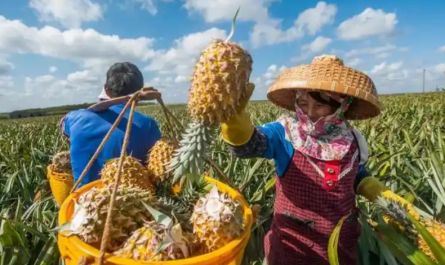
Strict control over maturity is essential. Harvesting occurs 135–142 days after flowering—a stage defined by three key indicators: the "eyes" (indentations) of the pineapple are at least 3mm deep; the base of the fruit stalk shows a slight, springy resilience when gently squeezed; and the inner core leaves can be pulled out smoothly. At this point, the fruit reaches its peak sweetness, with acidity levels kept below 0.45%, resulting in the most balanced flavor profile.
We reject the practice of harvesting unripe fruit and forcing it to ripen. Artificially ripening immature pineapples leads to incomplete sugar conversion, resulting in a harsh, sour, and astringent taste with a lackluster aroma. Only pineapples that ripen fully and naturally can accumulate sufficient sucrose and aromatic compounds.
Post-Harvest Handling to Enhance Taste
Saltwater Soaking: Soaking cut pineapple pieces in a light saltwater solution for 15–30 minutes effectively breaks down bromelain (a proteolytic enzyme), significantly reducing the "tingling" or stinging sensation in the mouth. It also neutralizes some organic acids, making the flavor cleaner and sweeter.
Refrigeration: Seal cut pineapple in plastic wrap and refrigerate for 1–2 hours. Low temperatures inhibit the activity of acidic compounds, reducing sourness and astringency while making the texture crisp, refreshing, and sweet.
Flavor Optimization: Lightly coat the surface of the pineapple pieces with honey and let them sit for 10–15 minutes; the honey’s sweetness helps balance any acidity. Alternatively, you can simmer the pineapple with rock sugar over low heat until the liquid evaporates to create candied pineapple—this significantly boosts sweetness and intensifies the flavor, with a shelf life of up to two weeks when refrigerated.
Pairing: Combine pineapple chunks with ingredients like yogurt, bananas, or strawberries to create a salad. The flavors of these other ingredients help balance the pineapple’s acidity, adding complexity and depth to the overall eating experience.
Optimizing flavor at the source (cultivation)
Select superior varieties: Choose high-quality cultivars with low levels of fruit proteases and an inherently better sugar-to-acid ratio. Such varieties can be eaten directly upon ripening—without the need for soaking in salt water—effectively setting a high ceiling for flavor at the genetic level.
Optimize water and fertilizer management:
Pineapples have specific nutritional requirements: they thrive on potassium, are sensitive to chlorine, and should not be over-supplied with nitrogen. Apply nitrogen, phosphorus, and potassium in scientifically balanced proportions; relying too heavily on nitrogen fertilizer can result in a bland, diluted flavor. Use 2,000 jin (approx. 1,000 catties) of well-rotted organic fertilizer and peanut meal per mu as a base dressing to increase soil organic matter and promote sugar accumulation.
Implement a "three-reduction" cultivation model:
Reduce the use of synthetic fertilizers, minimize unnecessary plant growth regulators, and lower planting density—keeping it to under 3,000 plants per mu to ensure adequate ventilation and light exposure. During the growth and ripening stages, avoid the arbitrary use of fruit-enlarging agents or forced ripening. This significantly lowers the incidence of "watery" fruit (water-soaked tissue) and internal browning ("black heart"), allowing the fruit to complete its natural sugar conversion process.
Manage temperature and light:
During periods of high heat and intense sunlight in the summer, wrap the fruit in protective netting to prevent sunburn; in the winter, take measures to protect against cold. This prevents extreme environmental conditions from interfering with the synthesis of flavor compounds. Ample sunlight and an optimal diurnal temperature range (the difference between day and night temperatures) allow the soluble solids content of the pineapples to consistently reach over 16.5%, with a sugar-to-acid ratio falling within the "golden range" of 35:1 to 42:1. Precise Harvesting for the Optimal Flavor Window
Strict control over maturity is essential. Harvesting occurs 135–142 days after flowering—a stage defined by three key indicators: the "eyes" (indentations) of the pineapple are at least 3mm deep; the base of the fruit stalk shows a slight, springy resilience when gently squeezed; and the inner core leaves can be pulled out smoothly. At this point, the fruit reaches its peak sweetness, with acidity levels kept below 0.45%, resulting in the most balanced flavor profile.
We reject the practice of harvesting unripe fruit and forcing it to ripen. Artificially ripening immature pineapples leads to incomplete sugar conversion, resulting in a harsh, sour, and astringent taste with a lackluster aroma. Only pineapples that ripen fully and naturally can accumulate sufficient sucrose and aromatic compounds.
Post-Harvest Handling to Enhance Taste
Saltwater Soaking: Soaking cut pineapple pieces in a light saltwater solution for 15–30 minutes effectively breaks down bromelain (a proteolytic enzyme), significantly reducing the "tingling" or stinging sensation in the mouth. It also neutralizes some organic acids, making the flavor cleaner and sweeter.
Refrigeration: Seal cut pineapple in plastic wrap and refrigerate for 1–2 hours. Low temperatures inhibit the activity of acidic compounds, reducing sourness and astringency while making the texture crisp, refreshing, and sweet.
Flavor Optimization: Lightly coat the surface of the pineapple pieces with honey and let them sit for 10–15 minutes; the honey’s sweetness helps balance any acidity. Alternatively, you can simmer the pineapple with rock sugar over low heat until the liquid evaporates to create candied pineapple—this significantly boosts sweetness and intensifies the flavor, with a shelf life of up to two weeks when refrigerated.
Pairing: Combine pineapple chunks with ingredients like yogurt, bananas, or strawberries to create a salad. The flavors of these other ingredients help balance the pineapple’s acidity, adding complexity and depth to the overall eating experience.
RECENT POSTS
Featured News